

Roof Maintenance Checklist for Texas Homeowners
 By Chris Grimes, owner of Verde RoofingPublished August 7, 2026 · 7 min read
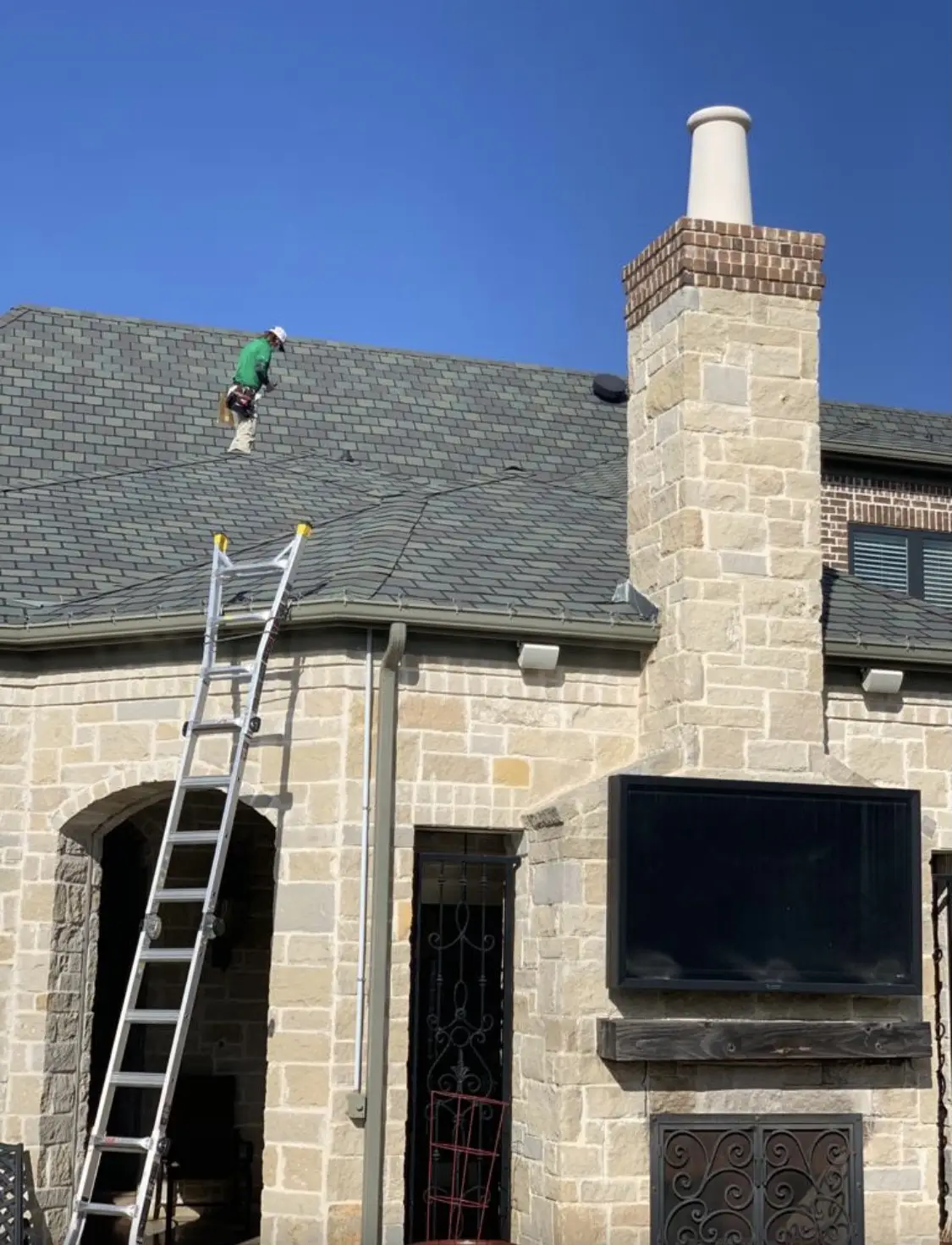
In short
A North Texas roof needs a professional inspection twice a year, ideally spring and fall, plus a check after every hail or high-wind storm. Between visits, watch from the ground: clear gutters and valleys, trim overhanging branches, and look for missing or lifted shingles, granules in downspouts and attic stains. A maintenance plan makes sense when it includes scheduled inspections, photos, small sealing and fastening work, and storm checks.
Key takeaways
- The National Roofing Contractors Association recommends inspecting a roof at least twice a year, preferably spring and fall, and after severe weather such as hail.
- Most maintenance in North Texas is about small parts that fail in heat and UV: pipe boots, sealants, flashing and vent fasteners.
- Homeowners should do their checks from the ground and in the attic; NRCA does not recommend inexperienced people walk on roofs.
- Dated photos from routine inspections create a before-and-after record that helps if you ever file a storm claim.
- A good maintenance plan spells out visit frequency, what is checked, what small repairs are included, and how storm visits work; get those terms in writing.
A roof in North Texas does not fail all at once. It fails a pipe boot at a time, a lifted shingle at a time, a clogged valley at a time. Summer heat bakes the sealants, spring storms throw hail and branches at it, and by the time a stain shows up on the ceiling, the small problem has usually been there for months.
The fix is not complicated: a short routine you do from the ground, a professional look twice a year, and a check after every serious storm. This checklist covers all three, plus an honest look at when a roof maintenance plan is worth paying for.
How often should a roof be inspected in North Texas?
The National Roofing Contractors Association (NRCA) recommends that homeowners inspect their roof systems at least twice a year, preferably in spring and fall, with additional inspections after severe weather such as hurricanes, tornadoes or hailstorms.
For DFW that maps neatly onto our seasons:
- Late winter or early spring, before hail season, to fix weak spots and photograph the roof's condition.
- Fall, after the summer heat has done its work on rubber, sealants and shingles.
- After any storm with hail or high winds, even if you see nothing from the ground.
NRCA also says it does not recommend that homeowners walk on roofs unless they have the experience and equipment to do it safely. Your part happens on the ground and in the attic.
What can I check myself from the ground?
Once a season, walk around the house with binoculars, then take a flashlight into the attic. It takes about half an hour.
Outside:
- Missing, lifted, creased or cracked shingles, especially on the windward side.
- Shingles that look darker in patches, which can mean granule loss.
- Granules collecting at downspout outlets (some after a new install is normal; a lot on an older roof is not).
- Gutters that are sagging, overflowing or pulling away from the fascia.
- Branches touching or hanging over the roof.
- Dented vents, gutters or downspouts after a storm.
- Black streaks (usually algae) or green moss on shaded slopes.
- Rusted, bent or loose flashing at chimneys and walls.
In the attic:
- Water stains on the underside of the decking or on rafters, especially around vent pipes and the chimney.
- Damp or compressed insulation.
- Daylight through the decking where there should not be any.
- Rusty nail tips, which can signal condensation from poor ventilation.
- A clean, dry AC drain pan under the air handler (many DFW homes have one in the attic, and it mimics a roof leak when it overflows).
If something on the list looks wrong, photograph it and call a roofer. Do not climb up to look closer.
What should a professional inspection cover?
A real roof inspection is done on the roof and in the attic, with photos. When I do a maintenance inspection, I start with the parts that fail first in our climate: every pipe boot, every flashing detail, and every exposed nail head and sealant line.
A thorough inspection should include:
- Penetrations: pipe boots, exhaust caps, furnace flues, box vents and turbines, checked for cracks, loose fasteners and failed sealant.
- Flashing: chimney, sidewall, headwall, skylight and kick-out flashing, checked for gaps, rust and caulk-only repairs.
- Field shingles: lifted tabs, broken seal strips, nail pops, creases, hail bruising and granule loss.
- Valleys and edges: debris, worn valley metal, drip edge and starter course condition.
- Ventilation: intake at the soffits and exhaust at the ridge or vents, unobstructed and balanced.
- Gutters and drainage: clear, sloped, securely fastened, discharging away from the foundation.
- Attic: signs of leaks, condensation and decking problems.
- A written report with dated photos and a priced list of any repairs.
Our guides to chimney, flashing and vent leaks and underlayment, ventilation and decking explain what the inspector is looking at in each area.
A season-by-season roof maintenance schedule for Texas
| Season | Homeowner tasks | Professional tasks |
|---|---|---|
| Late winter / early spring | Clean gutters, trim branches, ground check | Full inspection before hail season, reseal and refasten small items, baseline photos |
| Spring storm season | Check after every hail or wind event | Storm inspection with photos if hail or high wind hit your area |
| Summer | Watch the attic for heat, stains and AC drain pan overflow | Check ventilation if the attic runs extremely hot |
| Fall | Clean gutters after leaves drop, ground check | Full inspection after summer heat: pipe boots, sealants, flashing |
| After any severe storm | Ground and attic check, photos | Inspection on the roof, documentation for a possible claim |
For the timing of storms here, see our guide to DFW hail season.
What is different about maintaining a roof in Texas?
- UV and heat. Rubber pipe boots and exposed sealants dry out faster in North Texas sun than in milder climates. Expect to replace boots and touch up sealant over the life of a roof.
- Hail. Small hail may not break shingles but can bruise them and dent soft metal. A post-storm inspection with photos is the best evidence you will ever have of when damage happened. Our guide on documenting roof storm damage shows what to capture.
- Trees. Live oaks, pecans and cedar elms drop leaves and twigs that pack valleys and gutters, and branches scrape granules off shingles in wind.
- Algae. Black streaks on north and shaded slopes are common. Some shingles fight it with copper granules; Malarkey's Legacy Scotchgard shingle, for example, uses at least 10 percent copper granules, and its algae warranty covers blue-green algae only.
- Gutters. Heavy spring downpours overwhelm clogged or undersized gutters and push water under the roof edge. Our gutter guide for Texas homes and gutter services cover sizing and guards.
What records should I keep for my roof?
A folder, paper or digital, saves real money later. Keep:
- The installation invoice, the product names and colors, and the permit if one was pulled.
- The manufacturer warranty document and any registration confirmation.
- The roofer's workmanship warranty, in writing.
- Every inspection report with its dated photos.
- Invoices for every repair, with what was done and where on the roof.
- Photos of the roof from the ground each spring, from the same spots, so changes are easy to see.
These records matter in three situations. If a storm damages the roof, dated photos showing it was in good shape before the storm make the damage easier to document; the claim is yours, and a clean history helps you show the adjuster what changed. If you sell, buyers and their inspectors ask about roof age and repairs, and the TREC seller's disclosure form asks about previous roof repairs. And if a shingle defect ever turns up, the manufacturer will ask for proof of the product, the install date and that the roof was not neglected.
Keep a copy somewhere other than the house itself. A phone photo of each document in a cloud folder is enough.
What should I not do to my roof?
- Do not pressure wash shingles. It strips granules.
- Do not paint or coat an asphalt shingle roof.
- Do not caulk over every problem. Sealant is not a substitute for flashing or a new pipe boot.
- Do not walk the roof to clean gutters or check damage; use a ladder at the gutter line or call a pro.
- Do not let satellite, solar or holiday light installers screw into the roof without proper flashing and sealing.
Does a roof maintenance plan make sense?
A plan makes sense if you would rather not remember to schedule inspections, if your roof has a lot of penetrations or trees overhead, if you own a rental or a commercial building, or if you want a steady record of the roof's condition for insurance and resale. It makes less sense on a brand-new roof with a clear sky above it, if you are disciplined about booking inspections yourself.
Verde offers roof maintenance plans. We do not publish plan terms or pricing here, so ask us for the details in writing. Whatever company you use, a good plan should spell out:
- How many scheduled inspections per year, and when.
- Exactly what is inspected (the list above is a good benchmark).
- A written report with dated photos after every visit.
- Which small repairs are included (resealing, refastening, replacing a pipe boot) and which are billed separately.
- Gutter and valley cleaning, if included.
- Whether storm inspections after hail or high wind are included, and how fast someone comes out.
- What happens if a leak appears between visits.
- How the plan works with your shingle manufacturer warranty and the roofer's workmanship warranty.
- The price, the term, and how to cancel.
For context, HomeGuide's 2025 and 2026 cost guides put a standalone roof inspection at about $100 to $400 and minor repairs at about $150 to $1,000 nationally. Compare that to what a plan includes, and read our guide to roof warranties to see how maintenance records support a warranty claim.
When maintenance turns up something bigger
Most maintenance visits end with a short list of small fixes. Sometimes they find a slow leak (our guide on what to do when your roof is leaking covers the next steps), storm damage that is worth showing an insurance adjuster, or a roof near the end of its life. When that happens, you get photos and a straight answer on repair versus replacement, not pressure.
Set up your next roof inspection
To book a spring or fall inspection, a storm check, or to ask about the terms of our maintenance plans, call or text (214) 687-1951, 24/7, or book a free roof inspection. We serve Plano and the eleven counties around DFW.
Questions people ask next
How often should a roof be inspected in Texas?
The National Roofing Contractors Association recommends at least twice a year, preferably in spring and fall, plus after any severe weather such as a hailstorm. In North Texas that usually means one visit before spring hail season, one in fall after the summer heat, and a quick check after any storm with hail or high winds.
Can I pressure wash my roof to remove black streaks?
Do not pressure wash asphalt shingles. High pressure strips the protective granules and can void the manufacturer warranty. Black streaks are usually algae; a low-pressure rinse with a cleaner approved by the shingle maker is the safer route, and algae-resistant shingles with copper granules help prevent it on a new roof. Ask your roofer before using any chemical.
Does roof maintenance affect my shingle warranty?
It can. Manufacturer warranties typically exclude damage from neglect, improper ventilation, foot traffic or alterations, and many have specific installation requirements. Routine maintenance and records of it help show the roof was cared for. Read your actual warranty document and keep it with your inspection reports and invoices.
What does a roof inspection cost if I do not have a plan?
HomeGuide's December 2025 cost guide puts typical roof inspections at about $100 to $400, depending on roof size, complexity and method. Many roofers, including Verde, offer free inspections, especially after storms. A paid inspection may come with a more detailed written report, so ask what you receive before you book.
Should I seal or coat my shingle roof to make it last longer?
Generally no. Asphalt shingle roofs are not designed to be painted or coated, and coatings sold for shingles can trap moisture, change how the roof sheds water and conflict with the manufacturer warranty. Coatings are a real option for some flat commercial roofs, not for a typical sloped shingle roof on a house.
Sources
Chris Grimes owns Verde Roofing in Plano, Texas, a locally owned residential and commercial roofer serving Dallas–Fort Worth. Verde is an NTRCA Accredited Member, an RCAT member and a Dallas Observer Best of Dallas Best Roofer winner (readers’ choice) in 2021, 2022 and 2023.
Keep reading
Related guides
 Hail & storm damageDFW Hail Season: When Storms Hit and How to Get Your Roof ReadyIn Dallas–Fort Worth, thunderstorms and severe weather peak in spring, and the National Weather Service says large hail occurs nearly every year somewhere in the Metroplex…Read the guide
 Repair or replaceRoof Leaking? What to Do Right Now and How Leaks Get FoundTurn off power to any wet light fixture, catch the water, relieve a bulging ceiling with a small hole over a bucket, move valuables, and photograph…Read the guide
 Repair or replaceChimney, Flashing and Vent Leaks: The Most Common Roof RepairsMost roof leaks start where the shingles stop: at chimneys, walls, skylights and pipe or exhaust vents. Rubber pipe boots crack in Texas sun, chimney step…Read the guide