Repair or Replace Your Roof? An Honest Decision Guide
 By Chris Grimes, owner of Verde RoofingPublished November 7, 2026 · 7 min read
In short
Repair when the roof is reasonably young, the damage is limited to one area and the rest of the roof is sound. Replace when the roof is near the end of its expected life, damage is spread across several slopes, repairs keep recurring, or the decking is failing. HomeGuide's rule of thumb favors replacement for roofs over 20 years old, repair bills over $3,000, or damage covering more than a quarter of the roof.
Key takeaways
- Most small problems, such as a cracked pipe boot, a few blown-off shingles or a flashing leak, are repairs, not reasons for a new roof.
- InterNACHI's life-expectancy chart lists about 20 years for 3-tab and 30 years for architectural asphalt shingles, and warns that hot climates drastically reduce shingle life.
- HomeGuide puts typical minor roof repairs at $150 to $1,000 and full replacement at $5,700 to $16,000 on average, or $300 to $600 per square.
- Insurance pays for sudden storm damage, not age; TDI says insurers will not pay for a new roof just because it is old or worn out.
- The 2021 IRC does not allow a new layer over two or more existing layers or over a deteriorated deck, which often rules out an overlay.
Maybe there is a water stain on the ceiling, or a few shingles in the yard after a windy night, or a roofer at the door telling you the whole roof has to go. Whatever started it, you are facing a decision with a wide price gap: a repair that might cost a few hundred dollars, or a replacement that costs thousands.
The right answer depends on a handful of facts you can check, not on who knocks first. This guide walks through them honestly, including the many times a repair is all you need.
The decision at a glance
| Factor | Leans toward repair | Leans toward replacement |
|---|---|---|
| Roof age | Well within its expected life | Near or past its expected life |
| Damage area | One spot, one slope, one penetration | Several slopes or the whole roof |
| History | First problem in years | Recurring leaks in different places |
| Shingle condition | Flexible, granules mostly intact | Brittle, curling, heavy granule loss |
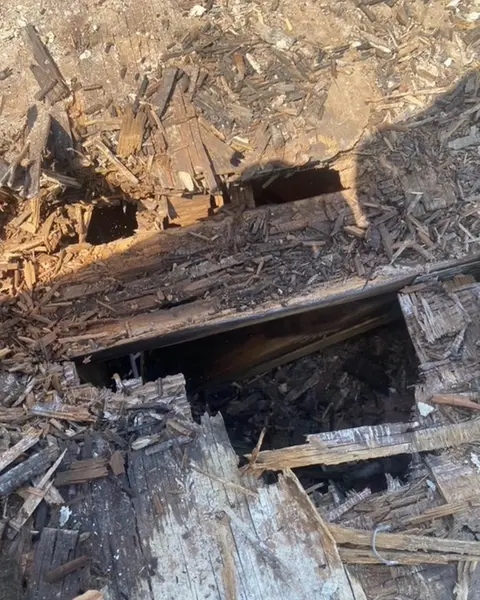
| Decking | Solid underfoot | Soft spots, sagging, rot |
| Insurance | Small damage below the deductible | Covered storm damage across the roof |
| Your plans | Staying put, roof otherwise sound | Long-term home, or the roof will be a sale issue |
No single row decides it. A ten-year-old roof with hail damage on every slope may be a replacement; a twenty-year-old roof with one cracked pipe boot may only need a repair for now.
How old is your roof, and how long should it last here?
Start with age. InterNACHI's estimated life-expectancy chart lists about 20 years for 3-tab asphalt shingles and 30 years for architectural asphalt shingles, 40 to 80 years for metal and 60 to 150 years for slate. The same chart warns that hot climates drastically reduce asphalt shingle life and that roofs in areas with severe weather such as hail may have a shorter-than-normal lifespan.
North Texas has both: long summers of heat and UV, and spring hail. Treat the chart's figures as an upper guide for asphalt here, not a promise. If you do not know your roof's age, check closing documents, permits or a past inspection report. Our guide on how long a roof lasts in Texas goes deeper by material.
Is the damage isolated or spread across the roof?
This is the most important question after age. A leak around a chimney, a cracked vent boot, a few wind-lifted shingles on one slope: these are repairs. Our guide to chimney, flashing and vent leaks covers the most common ones.
HomeGuide's roof repair guide offers a useful rule of thumb. It says replacement is often more cost-effective if the roof is more than 20 years old, the repair estimate is more than $3,000, or the damage affects more than 25% of the roof. Use that as a starting point for the conversation, not a verdict.
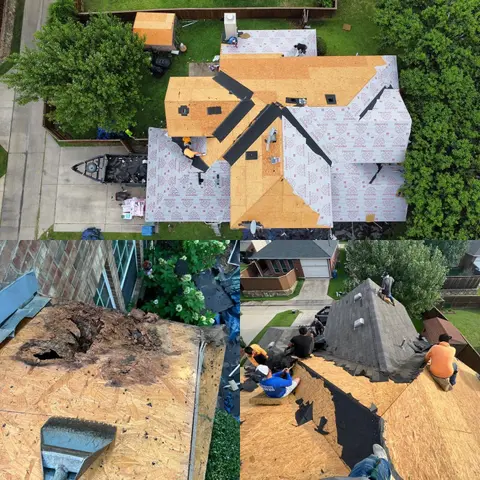
When I walk a roof to answer this question, I press on the decking with my feet across every slope, not just around the problem spot. A solid deck under a localized problem almost always means repair.
What do repairs and replacements typically cost?
Published national ranges give you a sense of scale. They are not Verde's prices; your number comes from a written estimate after a free inspection.
HomeGuide's February 2026 roof repair guide puts:
- minor repairs, like replacing a few missing shingles or sealing a small leak, at $150 to $1,000,
- replacing and sealing up to 25 asphalt shingles at $100 to $300,
- larger leaks that need some underlayment and shingles at $1,000 to $3,000,
- simple repairs such as a vent boot from about $75, and major leaks with structural damage at $6,000 or more.
HomeGuide's November 2025 replacement guide puts a full roof replacement at $5,700 to $16,000 on average, or $300 to $600 per square (100 square feet), with architectural shingles at $4 to $6 per square foot installed.
What moves the price: roof size in squares, pitch and height, number of layers to tear off, decking that needs replacing, the material you choose, access, and code items like drip edge. A two-story home in Frisco with steep slopes will cost more per square than a single-story ranch with a walkable roof. Try our roof cost calculator for a rough range, and see what a new roof costs in Dallas–Fort Worth and typical roof repair costs for more detail.
Is insurance paying for any of it?
Insurance changes the math only when the damage is sudden and covered, such as hail or wind. The Texas Department of Insurance is clear that your insurance company won't pay for a new roof just because it's old or worn out. It also notes that companies may switch to actual cash value coverage as roofs age, and that if your roof is in poor condition, your company might not cover it at all.
So an old roof with no storm damage is a replacement you plan and pay for. A roof with real hail damage across the slopes may be a covered replacement, minus your deductible and, on some policies, depreciation. If you think a storm is involved, read how a roof insurance claim works in Texas before you decide.
Can you put new shingles over the old ones?
An overlay sounds like a cheaper middle path, but it is often not allowed and rarely a good idea here. Under the 2021 International Residential Code's reroofing rules, a new covering may not be installed over a roof that already has two or more layers, or over a deck that is water-soaked or deteriorated. Cities may add their own amendments.
Even where an overlay is legal, it hides the deck, adds weight and leaves old problems in place. In hail country, where you want the next roof to perform and to be easy to inspect after a storm, a full tear-off is usually the better value.
What about a partial replacement?
Between a spot repair and a full roof sits the partial replacement: one slope or one section reroofed while the rest stays. It can make sense when wind or a fallen limb damaged one side of the house and the rest of the roof is young and sound.
The trade-offs are real. New shingles rarely match a roof that has weathered for years in Texas sun, and a discontinued product can make the difference obvious from the street, which matters in HOA neighborhoods with appearance rules. The older remainder of the roof will also wear out on its own schedule, so you may be back for the rest in a few years, paying for setup, permits and disposal a second time. Ask for the partial and full prices side by side before you choose.
Buying time on an older roof
Sometimes the honest plan is a repair now and a replacement later. If a roof is near the end of its life but the problem is isolated, a modest repair can carry it through a season while you budget, compare bids and choose materials without pressure. That is a reasonable choice as long as everyone is clear about what the repair is: a bridge, not a fix for the whole roof. Ask the roofer to write down what they repaired and what they saw elsewhere, so the next decision is based on facts. Our guide on how to pay for a new roof covers ways to plan for the bigger expense.
When is a repair the right call?
- The roof is well within its expected life.
- The problem is in one area: a flashing, a vent, a valley or a single slope.
- The shingles around it are still flexible and hold their granules.
- The decking is solid.
- Matching shingles are available, or the repair is out of sight.
- The repair cost is small next to the cost of replacement.
When does replacement make more sense?
- The roof is near or past its expected life for the material.
- Leaks show up in different places from season to season.
- Shingles are brittle, curling or bald across large areas.
- The deck is soft or sagging in more than one spot.
- Storm damage covers several slopes.
- You plan to stay for years and want one large project instead of a string of repairs.
Our list of signs you need a new roof explains what each of these looks like. Selling soon? Read what to do when the roof comes up in a home inspection.
Questions to ask a roofer who recommends replacement
HomeGuide itself warns homeowners to beware of companies that recommend a full replacement when only minor repairs are needed. Ask:
- Can you show me photos of the damage on every slope, not just one?
- What would a repair cost, and how long would you expect it to hold?
- How old do you estimate the roof is, and why?
- Did you check the decking, and where is it soft?
- Is any of this storm damage, or is it age and wear?
A good roofer will price the repair too, even when they think replacement is wiser. If the honest answer is that the roof has years left, a maintenance plan may protect it better than either option.
Get an honest answer about your roof
Verde Roofing inspects for free and tells you plainly whether you need a repair, a replacement or nothing yet. Chris walks the roof with you, photographs what he finds and explains the options before you spend a dollar. See our roof replacement and roof repair pages for what each involves. Call or text (214) 687-1951, 24/7, or book a free roof inspection.
Questions people ask next
Can I replace just one side of my roof?
Sometimes. If damage is confined to one slope and matching shingles are available, a partial replacement can make sense. The risks are a visible color difference and an older remainder that will need work sooner. Ask for the price of the partial job and the full job side by side, with the age of the rest of the roof in mind.
How many repairs are too many?
There is no fixed number, but a pattern matters more than a count. If you are paying for leaks in different places every season, or the same area keeps failing, the roof is telling you its materials are worn out. At that point the money spent on repairs is better put toward a replacement.
Is a roof repair worth it if I plan to sell in a year or two?
Often, yes, if the rest of the roof is sound. A buyer's inspector will note the roof's age and condition either way. A documented repair with an invoice is easier to explain than an active leak. If the roof is near the end of its life, get a replacement estimate too, since buyers may ask for a credit.
Does a new roof need a permit in North Texas?
Many DFW cities require a permit for a reroof and inspect the work against the code they have adopted, but rules differ by city. Ask your roofer whether a permit is needed for your address and who pulls it. A roofer who suggests skipping a required permit is a reason to keep looking.
Should I wait for hail to replace an old roof?
Waiting for a storm to pay for a worn-out roof is a gamble. Insurers pay for sudden storm damage, not age, and many reduce payment on older roofs. If your roof is failing now, leaks will do more damage than a storm claim would cover. Get an honest inspection and decide on the roof's condition.
Sources
Chris Grimes owns Verde Roofing in Plano, Texas, a locally owned residential and commercial roofer serving Dallas–Fort Worth. Verde is an NTRCA Accredited Member, an RCAT member and a Dallas Observer Best of Dallas Best Roofer winner (readers’ choice) in 2021, 2022 and 2023.
Keep reading
Related guides
 Cost & financingHow Much Does Roof Repair Cost? Common Repairs and What Drives the PriceFixr’s 2026 guide puts the average roof repair at about $1,150, with most jobs between $400 and $1,900. Small fixes such as a pipe boot or…Read the guide
 Repair or replaceHow Long Does a Roof Last in Texas? Lifespan by MaterialPublished life-expectancy charts give about 20 years for 3-tab asphalt shingles, about 30 for architectural shingles, 40 to 80 for metal and far longer for clay…Read the guide
 Repair or replace12 Signs You Need a New RoofThe clearest signs you need a new roof are age near the end of the material's expected life, curling or brittle shingles, heavy granule loss with…Read the guide