

Chimney, Flashing and Vent Leaks: The Most Common Roof Repairs
 By Chris Grimes, owner of Verde RoofingPublished September 4, 2026 · 8 min read
In short
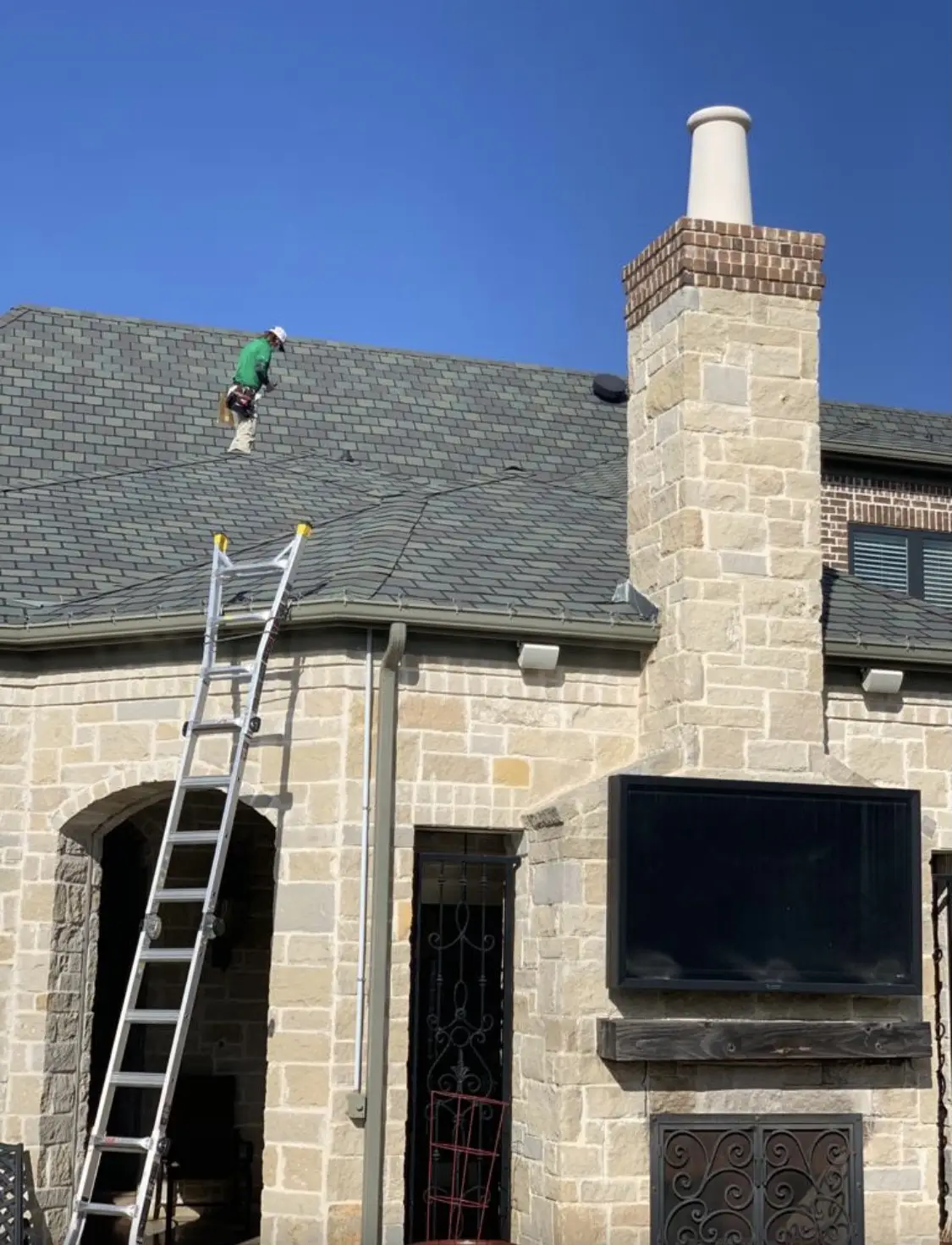
Most roof leaks start where the shingles stop: at chimneys, walls, skylights and pipe or exhaust vents. Rubber pipe boots crack in Texas sun, chimney step and counterflashing loosen or were caulked instead of flashed, and wide chimneys without a cricket hold water. The fix is replacing the failed boot or rebuilding the flashing correctly, not adding more caulk.
Key takeaways
- Flashing is the metal or membrane that sheds water where the roof meets a wall, a chimney, a change in slope or an opening.
- The International Residential Code requires a cricket on the uphill side of any chimney more than 30 inches wide.
- Rubber pipe boots dry out and crack under North Texas UV, and they are one of the most common leak sources on DFW homes.
- Caulk is a maintenance item, not flashing; a leak that was “fixed” with sealant usually returns within a few seasons.
- HomeGuide's 2026 guide puts chimney flashing repair at $300 to $1,800 depending on chimney size, damage and roof access.
If your roof leaks, odds are good it is not leaking through the middle of the shingles. It is leaking where the shingles stop: at the chimney, at the wall beside a second-story roof, around a plumbing pipe, at a furnace flue or a skylight. Those joints are where water changes direction, and they depend on small pieces of metal and rubber that take the worst of the North Texas sun.
This guide explains what flashing is, why each type fails, how a proper repair looks compared with a quick caulk job, what the building code says, and what these repairs typically cost.
What is roof flashing and why do leaks start there?
Flashing is the metal (or sometimes membrane) that bridges the gap between the roof covering and anything that interrupts it. Shingles shed water well when it runs straight down a slope. The moment water meets a chimney, a wall or a pipe, it needs a path around that obstacle and back on top of the shingles.
The International Residential Code (2021 edition), the national model code for houses, is specific about this. Section R903.2.1 requires flashing at wall and roof intersections, wherever there is a change in roof slope or direction, and around roof openings. It also requires a flashing to divert water away where the eave of a sloped roof meets a vertical sidewall, and it sets a minimum for metal flashing of 0.019 inch (No. 26 galvanized sheet). Your city's adopted edition and local amendments are what apply to your house, so the permit office has the final word.
Flashing fails for a handful of reasons:
- It was never installed right. Caulk or roofing cement used in place of real flashing.
- It was reused when it should not have been. Old, bent or rusted pieces put back during a reroof.
- Sealant aged out. Exposed sealant at the top of flashing dries and cracks in summer heat.
- Movement. Chimneys and walls expand and contract at different rates than the roof deck.
- Storm damage. Hail dents or splits soft metal and rubber; wind lifts edges.
Why does my roof leak around the chimney?
Chimney leaks are among the most common and most misdiagnosed repairs. A properly flashed brick or stone chimney has several layers working together:
- Step flashing along the sides: individual L-shaped pieces woven in with each course of shingles.
- Counterflashing set into cut mortar joints and lapped down over the step flashing, so water running down the brick lands on top of the step flashing, not behind it.
- Front (apron) flashing across the downhill face.
- Back flashing or a cricket on the uphill side.
What is a chimney cricket?
A cricket (also called a saddle) is a small peaked structure built behind the chimney that splits the water and sends it around both sides instead of letting it pool against the brick. IRC Section R903.2.2 requires a cricket or saddle on the ridge side of any chimney or penetration more than 30 inches wide, measured perpendicular to the slope, covered with sheet metal or the same material as the roof.
Many older homes in Lakewood, Preston Hollow and the Park Cities, and plenty of newer ones with wide stone chimneys, have chimneys that should have a cricket and do not. If yours leaks from the back side in heavy rain, that is the first thing to check.
When the chimney itself is the problem
Not every chimney leak is a roofing leak. A cracked concrete crown, a missing cap, porous brick or loose siding on a framed chimney chase can let water inside the chimney, and it will show up in the same place on your ceiling. A good inspection looks at the flashing, the crown and the cap together. If the masonry is the issue, the honest answer is that you need a mason or chimney professional, not a new roof.
Why do pipe boots and roof vents leak?
Every roof has penetrations: plumbing vents, bathroom and kitchen exhaust caps, furnace and water heater flues, box vents, turbines and ridge vents. Each one is a hole in the roof sealed by a boot, collar or flashing base.
- Plumbing vent pipe boots. Most are a metal or plastic base with a rubber collar that hugs the pipe. In North Texas sun the rubber dries, cracks and lets water run down the pipe into the attic. It is one of the most common leaks we see on DFW homes.
- Gas vent collars. Metal flues for furnaces and water heaters use a storm collar above the flashing. If the collar is loose or missing, wind-driven rain runs down the pipe.
- Box vents and turbines. Hail dents them, wind can loosen them, and their flashing bases can lift.
- Ridge vents. Poorly installed or wrong-type ridge vents can let wind-driven rain in at the peak.
When I inspect a roof, I look at every pipe boot up close, because a cracked collar is easy to miss from the ground and almost always ends with a ceiling stain in a bathroom or hallway.
What about walls, dormers and skylights?
On two-story homes common in Frisco, McKinney and Allen, lower roofs run into upper walls. Those joints need step flashing behind the siding or stucco, and at the bottom, a kick-out flashing that throws water into the gutter instead of down the wall. The code language about diverting water where an eave meets a sidewall is exactly this detail. A missing kick-out often shows up as rotted siding or a stain at the top of a first-floor window, not as a ceiling leak.
Skylights leak either at the flashing kit around the frame or at the skylight's own seal. Older units with failed seals sometimes make more sense to replace than to keep repairing.
How are flashing and vent leaks fixed properly?
The right fix depends on what failed, but the pattern is the same: remove the shingles around the detail, inspect the decking and underlayment, replace or rebuild the flashing correctly, and reinstall shingles so each piece laps over the one below it.
| Problem | Proper repair | Typical published cost |
|---|---|---|
| Cracked plumbing pipe boot | Replace the boot and reseat surrounding shingles | $250 to $600 (HomeGuide leak guide) |
| Loose or missing gas vent collar | Reset or replace the collar and flashing base | $400 to $1,500 (HomeGuide leak guide) |
| Leaking roof vent | Reseal or replace vent and its flashing | $100 to $500 (HomeGuide leak guide) |
| Chimney flashing, small to large chimney | Rebuild step, counter and apron flashing | $300 to $1,800 (HomeGuide chimney guide) |
| Skylight leak | Reflash or replace skylight kit | $225 to $800 (HomeGuide leak guide) |
| Valley leak | Replace valley metal or rework the valley | $200 to $850 (HomeGuide repair guide) |
These are national ranges from HomeGuide's 2026 cost guides, not our pricing. Steep pitch, two-story height, tile or slate roofing, rotted decking, and a missing cricket that has to be framed in all push the number up. For more on how repairs are priced, see roof repair cost.
Signs of a quick fix that will fail again
- Thick beads of caulk or tar where metal flashing should be.
- Face-nailed flashing with exposed nail heads and no sealant.
- Counterflashing glued to the face of the brick instead of set into a cut mortar joint.
- A new pipe boot installed over the shingles instead of under the upper course.
- Mismatched patches of shingles stacked around a vent.
How does a roofer diagnose which detail is leaking?
A careful diagnosis starts in the attic, following the stain uphill to the nearest penetration or wall, then moves to the roof surface above it. Your account of when it leaks matters: only in wind-driven rain from one direction suggests a flashing or vent detail on that side; any steady rain suggests a cracked boot or failed sealant. When the evidence is unclear, a controlled water test, one detail at a time, settles it.
If water is actively coming in, our guide on what to do when your roof is leaking covers the first steps.
Repair the flashing or replace the roof?
On a roof with plenty of life left, flashing and vent leaks are repairs, full stop. Replacing a pipe boot or rebuilding chimney flashing should not turn into a sales pitch for a new roof.
Replacement becomes the better value when the shingles around the detail are brittle and crack when lifted, when several details are failing at once, or when storm damage is widespread. In that case, all new flashing, pipe boots and vents should be part of the roof replacement, and the estimate should say so line by line. Our guide to reading a roofing estimate shows what to look for, and underlayment, ventilation and decking explains the hidden layers that work with flashing.
Questions to ask before a flashing repair
- What exactly failed, and can you show me photos of it?
- Will you replace the flashing or just seal it?
- Is a cricket required behind my chimney, and do I have one?
- Is the chimney crown or cap part of the problem?
- Will you check the decking under the repair for rot?
- What workmanship warranty do you give on this repair, in writing?
If hail just came through, also ask the roofer to photograph dented vents and flashing before touching anything; they help show storm size, as covered in signs of hail damage on a roof. And a twice-a-year look at boots and flashing, part of our roof maintenance checklist, catches most of these problems early.
Get the leak source found
If you have a stain near a chimney, wall or vent, call or text (214) 687-1951, 24/7, or book a free roof inspection. Chris will inspect the flashing and penetrations with you, show you photos of what failed, and give you a written roof repair estimate before any work starts.
Questions people ask next
Can I just caulk around my chimney to stop the leak?
Caulk can buy a few weeks, but it is not a repair. Chimneys move slightly with temperature, masonry absorbs water, and sealant shrinks and cracks in Texas heat. A lasting fix uses step flashing woven with the shingles and counterflashing set into the mortar joints. If your chimney is already covered in old caulk, that is usually a sign the flashing underneath needs to be redone.
How do I know if the leak is the flashing or the chimney itself?
Water can enter through a cracked chimney crown, porous brick, a missing chimney cap or a gap in siding on a chimney chase, then show up exactly where a flashing leak would. A roofer should inspect the flashing, crown and cap together and, if needed, water-test the chimney separately from the roof. Some fixes need a mason or chimney sweep instead of a roofer.
How long does a rubber pipe boot last in Texas?
There is no reliable published lifespan, because it depends on the product, sun exposure and installation. In North Texas, rubber collars often crack well before the shingles around them wear out. That is why boots should be checked at every roof inspection and replaced proactively when they show cracking, rather than after a ceiling stain appears.
Should flashing be replaced when I get a new roof?
Usually, yes. Pipe boots, step flashing and vent flashing are typically replaced during a full replacement, and many roofers also replace counterflashing if it is damaged. Some reuse sound counterflashing on brick. Ask the roofer to list every flashing item on the estimate as new, reused or reset so you know exactly what you are paying for.
Does hail damage roof vents and flashing?
Yes. Hail dents soft metal such as box vents, turbine vents, exhaust caps and some flashing, and it can split aged rubber boots. Dented vents may still shed water, but they are useful evidence of the storm's size during an insurance inspection. A roofer should photograph them before any repair so the adjuster can see the damage.
Sources
Chris Grimes owns Verde Roofing in Plano, Texas, a locally owned residential and commercial roofer serving Dallas–Fort Worth. Verde is an NTRCA Accredited Member, an RCAT member and a Dallas Observer Best of Dallas Best Roofer winner (readers’ choice) in 2021, 2022 and 2023.
Keep reading
Related guides
 Repair or replaceRoof Leaking? What to Do Right Now and How Leaks Get FoundTurn off power to any wet light fixture, catch the water, relieve a bulging ceiling with a small hole over a bucket, move valuables, and photograph…Read the guide
 Cost & financingHow Much Does Roof Repair Cost? Common Repairs and What Drives the PriceFixr’s 2026 guide puts the average roof repair at about $1,150, with most jobs between $400 and $1,900. Small fixes such as a pipe boot or…Read the guide
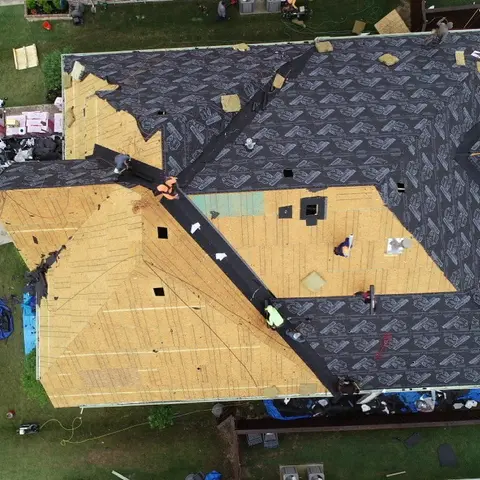 Roofing materialsUnderlayment, Ventilation and Decking: The Parts of a Roof You Don't SeeUnder the shingles sit the decking (plywood or OSB), underlayment (synthetic or felt), self-adhered ice and water barrier at valleys and other leak-prone spots, drip edge…Read the guide