

How to Document Roof Storm Damage for Your Insurance Claim
 By Chris Grimes, owner of Verde RoofingPublished August 11, 2026 · 8 min read
In short
To prove roof storm damage, record the storm date, photograph hailstones and dented soft metal with a scale reference, capture wide and close-up photos of the roof from a safe vantage point or through a professional inspection, document interior leaks before cleanup, and keep every receipt and a log of calls with your insurer. Keep damaged items until the insurer says you can discard them.
Key takeaways
- TDI tells homeowners to photograph and video all damage, list damage inside and out, and keep damaged items until the insurer gives permission.
- Collateral damage such as dented gutters, vents and A/C fins is strong evidence that hail big enough to matter hit the house, according to IBHS.
- Keep receipts for tarps, repairs and living expenses; your policy may pay for temporary repairs and additional living expenses.
- Log every call with your insurer: date, name, what was said; Triple-I advises keeping copies of everything you send and receive.
- A roofer can document the roof and meet the adjuster to show the damage, but you own the claim and make the decisions.
Your insurer will decide your roof claim based on what it can see and verify. The adjuster wasn't at your house during the storm. They arrive days or weeks later, look at the roof, read what you have sent, and write an estimate. The better your records, the less room there is for disagreement about what happened and what it damaged.
The good news is that documenting storm damage doesn't take special equipment. It takes a phone, a coin, a notebook, and doing things in the right order. Here is the method.
Why does documentation matter so much on a roof claim?
Roof claims turn on a few questions: Did a covered storm happen on a specific date? Did it damage your roof, or is what you see wear, age or installation? How much of the roof is affected? Good records answer all three.
The Texas Department of Insurance gives every homeowner the same core advice after hail or wind: take photos and video of the damage, make a list of damage inside and outside the house, keep a list of everyone you talk to at the insurance company, and don't throw away damaged items until your insurer tells you to. Triple-I's guidance matches: photograph or video the damage before doing anything else, and keep receipts for everything you spend.
Documentation also protects you when time passes. Damage that is fresh and clearly tied to a storm date is far easier to show than damage discovered months later.
What should you record about the storm itself?
Start with the event, because everything else hangs on it:
- Date and approximate time the storm hit your home
- What you saw and heard: hail size, wind, how long it lasted
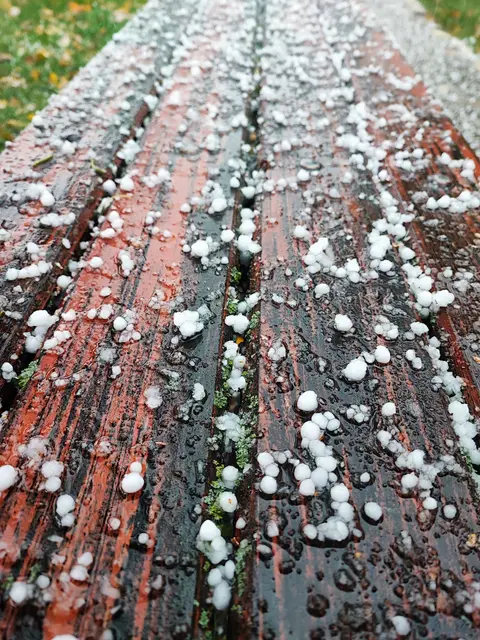
- Hailstones photographed next to a coin, ruler or tape measure, as soon as it is safe to go outside, because they melt fast
- Local news or weather alerts you received, saved as screenshots
- Neighbors' damage you notice, such as broken windows or roofers on nearby roofs
Write a short paragraph in your notes app that night describing what happened. Memories blur quickly, and a note written the same day is a better record than one reconstructed weeks later.
What photos and video does an adjuster need to see?
Think of your photos as telling a story from the outside in: proof the storm hit, then what it did to the roof, then what it did inside.
| What to photograph | How to shoot it | Why it matters |
|---|---|---|
| Hailstones | Next to a coin or ruler, on a flat surface | Shows hail size on the storm date |
| Gutters and downspouts | Close-ups of dents, then a wider shot of the run | Collateral evidence of hail strength |
| Roof vents, pipe jacks, flashing | Zoomed from the ground, or by your roofer on the roof | Soft metal dents line up with shingle damage |
| A/C condenser fins | Close-up of dented fins | IBHS lists this as a classic hail sign |
| Window screens, wraps, siding | Each side of the house | Shows storm direction and spread |
| Roof slopes | Wide shot of each slope, then close-ups of damage with scale | The core of the claim |
| Missing or creased shingles | Close-ups and where they landed in the yard | Wind damage evidence |
| Attic | Water stains, wet insulation, daylight | Links the roof damage to leaks |
| Interior ceilings and walls | Wide shot of the room, then the stain or damage | Interior damage is part of the claim |
| Damaged belongings | Each item, plus a list | Contents coverage |
IBHS, the insurance industry's research group, tells homeowners to look for collateral damage first: spatter marks or impact dents on items around the building are good indicators that hail occurred. It also warns about look-alikes, such as installation marks, blisters and normal granule loss, that are not hail. Photograph what you find, but let a careful inspection sort out what is storm damage. Our guide to the signs of hail damage on a roof shows the difference.
A few tips that make photos far more useful:
- Wide, then close. A close-up of a dent means little unless a wider shot shows where it is.
- Use a scale reference in every close-up: a coin, a tape measure, a pen.
- Shoot every side of the house in the same order, so the set is easy to follow.
- Take a short video walking around the house, narrating what you see.
- Don't edit or filter. Keep the originals with their date and time data.
- Back up the same day to a cloud folder.
Should you climb on the roof to take photos?
No. A wet, granule-covered roof is slippery, and many homes in Frisco, McKinney and Plano are tall two-stories with steep slopes. Photograph what you can from the ground using your phone's zoom, and let a roofer with proper fall protection document the roof surface.
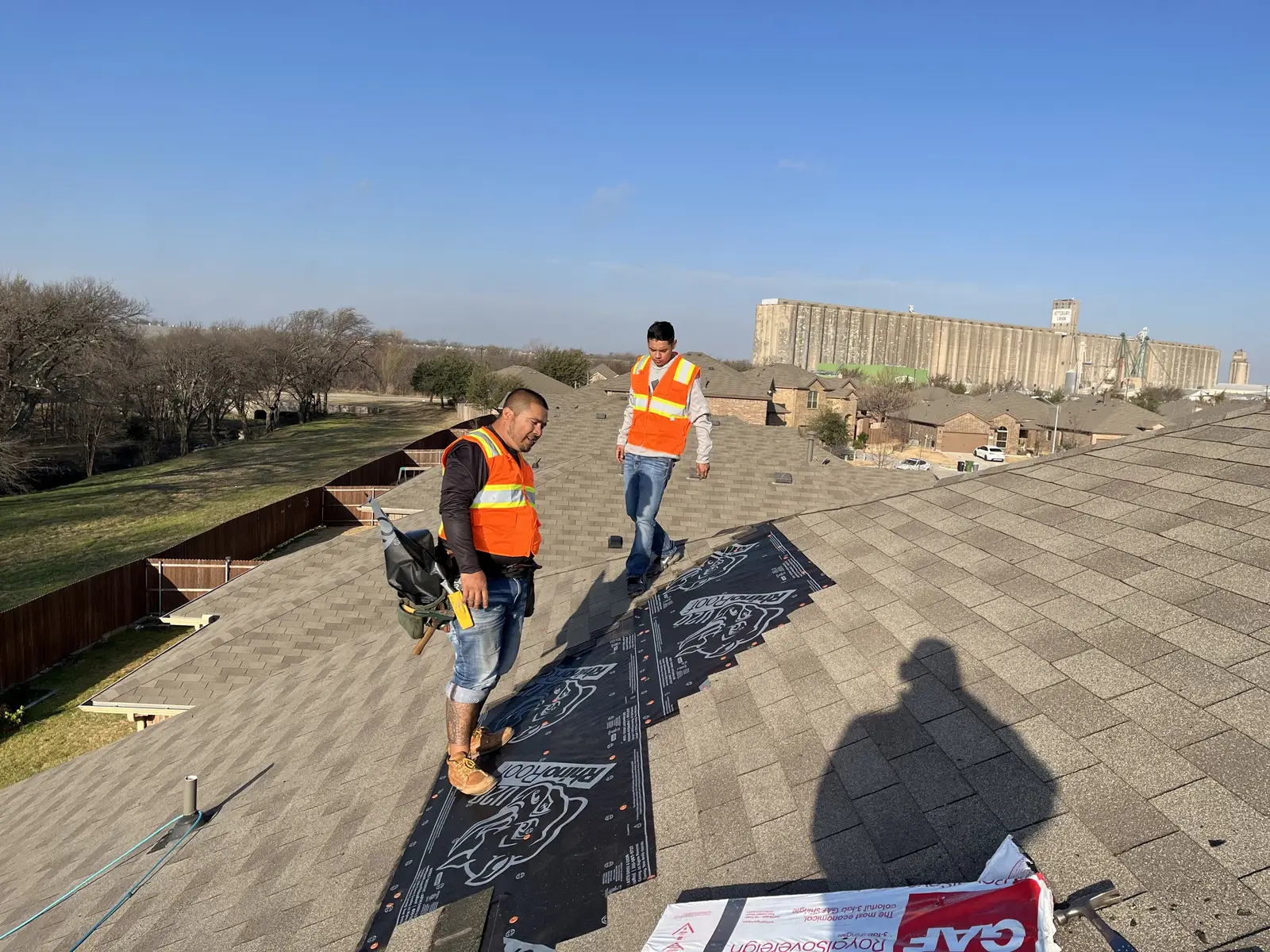
A professional inspection should give you a full photo set: every slope, test squares with marked and counted hits, close-ups with scale, soft metal, ridge caps, flashing and the attic. At Verde Roofing, Chris Grimes inspects the roof with you, documents the damage with photos, and explains repair versus replacement before any claim is filed. You keep the photos.
When I photograph a roof for a homeowner, I shoot it the way an adjuster will look at it: slope by slope, wide shot first, then the damage up close with a scale next to it. If a photo needs explaining, I take another one.
What should you document inside the house?
Interior damage is easy to clean up too soon. Before you do:
- Photograph every stain, drip point and wet area, with the room in view
- Photograph damaged drywall, flooring, furniture and electronics
- Measure and photograph wet areas with a tape measure
- Note when you first saw each leak
- List damaged items with approximate age and value
- Keep damaged items until your insurer says you can discard them
Triple-I recommends preparing an inventory of damaged or destroyed items and giving a copy to the adjuster along with any receipts, and notes that a home inventory made in advance speeds this up. If you have to dry things out, photograph them first, then dry them, then photograph them again.
Which receipts and records should you keep?
Keep a paper trail for every dollar the storm costs you. TDI notes your policy may pay for temporary repairs and advises saving all receipts. If you can't stay in your home, TDI says most policies cover some of the related costs, and Triple-I adds that you will need records of those extra living expenses.
Your receipt list:
- Emergency tarping or board-up invoices (see emergency roof tarping)
- Materials you bought: plastic, buckets, fans, dehumidifiers
- Water mitigation or drying services
- Hotel, meals and other extra costs if you had to leave the house
- Tree or debris removal
Triple-I notes that temporary repair costs count toward your total settlement, so keep them reasonable and documented.
How should you keep track of conversations with your insurer?
Treat every contact as a record. TDI's claim guide tells homeowners to get the adjuster's name, phone number and email, keep a list of what the company needs from you, and take notes on calls. Triple-I advises keeping copies of everything you submit and everything the insurer sends you.
A simple claim log looks like this:
| Date | Who | How | What was said or sent | Next step |
|---|---|---|---|---|
| Day of report | Insurer claims line | Phone | Reported hail damage, got claim number | Wait for adjuster call |
| A few days later | Assigned adjuster | Phone | Scheduled inspection | Ask roofer to attend |
| After inspection | Adjuster | Received estimate | Compare with roofer's estimate |
Keep it in a notes app, a spreadsheet or a notebook, whatever you will actually use. It matters most if questions come up later about timing or what was promised.
TDI also lists the insurer's deadlines under Texas law: 15 business days to acknowledge your claim, 15 business days after receiving everything it needs to say whether it will pay (extendable by 45 days with an explanation), and 5 business days to pay once it agrees. Your log shows whether those clocks are being met.
How do you organize it all?
Make one folder, in the cloud, named for the claim. Inside it:
- Storm — notes, hailstone photos, alerts
- Exterior — soft metal, siding, windows, each side of the house
- Roof — your ground photos and the roofer's inspection photos
- Interior — leaks, damaged rooms and belongings, inventory
- Receipts — every invoice and receipt
- Insurance — policy, declarations page, claim number, letters, estimates, call log
- Estimates — roofer's written estimate and any supplements
When the adjuster asks for something, you can send it in minutes. When the insurer's estimate arrives, you can compare it line by line with the roofer's. Our guide on how to read a roofing estimate helps with that.
How does your roofer fit into the documentation?
A roofer's documentation is usually the most detailed record of the roof itself. On a claim, our role is clear: we inspect, document the damage, meet the adjuster on site to show what we found, write the repair estimate, explain the process, and do the work. You own the claim and talk with your insurer. Under Texas Insurance Code §4102.163, a contractor working on your property may not act as your public adjuster, and you should be wary of anyone who says otherwise. Our insurance claim help page explains exactly what we do.
If you want to know what happens when the adjuster arrives, read the insurance adjuster's roof inspection, and for the full timeline, how a roof insurance claim works in Texas. For the first days after a storm, see what to do after a hailstorm and our storm and hail damage service.
Get your roof documented properly
If a storm hit your home in DFW, call or text Verde Roofing at (214) 687-1951, 24/7, or book a free roof inspection. Chris will inspect the roof with you, photograph the damage slope by slope, and give you a clear record you can share with your insurer.
Questions people ask next
Do I need to be home when the insurance adjuster comes?
It helps a lot. TDI advises being available so the adjuster can see everything. You can point out interior damage, hand over your photo list and receipts, and answer questions about the storm. If you'd like, your roofer can be there to walk the roof with the adjuster and show what was found.
Are phone photos good enough for an insurance claim?
Yes. Modern phone photos are sharp and store the date, time and often the location. What matters more is coverage and context: a wide shot of each area, then close-ups with a coin or tape measure for scale. Back them up to the cloud the same day.
What if I didn't take photos before cleaning up?
Document what you can now: remaining damage, damaged items you kept, receipts for cleanup, and photos of soft metal and the roof that haven't changed. Write down what happened while you remember it. An inspection can still find and photograph hail or wind damage on the roof itself.
Should I make permanent repairs before the adjuster sees the roof?
Not usually. Make temporary repairs that stop further damage, such as a tarp, and keep receipts. Triple-I advises holding off on extensive permanent repairs until the adjuster has assessed the damage, so the insurer can see what was there.
How long should I keep claim records?
Keep everything at least until the claim is fully paid, including any held-back depreciation, and the work is finished. Many homeowners keep roof records for as long as they own the house, because they help with future claims, warranty questions and selling the home.
Sources
- Texas Department of Insurance: After hail or windstorms
- Texas Department of Insurance: Steps to getting your home or car insurance claim paid
- Triple-I: How to file a homeowners claim
- Triple-I: Settling insurance claims after a disaster
- IBHS: Is it hail damage? A guide to what is hail damage and what is not
Chris Grimes owns Verde Roofing in Plano, Texas, a locally owned residential and commercial roofer serving Dallas–Fort Worth. Verde is an NTRCA Accredited Member, an RCAT member and a Dallas Observer Best of Dallas Best Roofer winner (readers’ choice) in 2021, 2022 and 2023.
Keep reading
Related guides
 Insurance claimsThe Insurance Adjuster's Roof Inspection: What to Expect and How to PrepareThe adjuster walks the roof, counts hail hits in test areas, checks soft metals, slopes and interior damage, measures the roof and writes an estimate. You…Read the guide Insurance claimsHow a Roof Insurance Claim Works in Texas, Step by StepA Texas roof claim runs in order: protect the home, get the roof inspected and documented, report the claim, meet the adjuster, receive the insurer's decision…Read the guide
 Hail & storm damageSigns of Hail Damage on a Roof (and What Is Not Hail Damage)Real hail damage on a shingle roof shows up as random, roughly round impact marks where granules are knocked away and the mat underneath feels soft…Read the guide