12 Signs You Need a New Roof
 By Chris Grimes, owner of Verde RoofingPublished October 6, 2026 · 8 min read
In short
The clearest signs you need a new roof are age near the end of the material's expected life, curling or brittle shingles, heavy granule loss with bald spots, leaks in more than one place, sagging or soft decking, and storm damage spread across several slopes. One missing shingle or dark algae streaks are usually not reasons to replace. An inspection that checks the decking and flashing confirms what you see from the ground.
Key takeaways
- Age matters most when combined with wear: InterNACHI lists about 20 years for 3-tab and 30 for architectural shingles, and warns hot climates shorten that.
- Curling, cracking, bald spots and heavy granules in the gutters on an older roof mean the shingles are wearing out across the board.
- Leaks in different places, daylight in the attic and a sagging deck point to a roof system that repairs will not save.
- Dark algae streaks are cosmetic according to roofing manufacturers' guidance, and pressure washing them can damage shingles.
- Under the 2021 IRC, a roof that already has two layers cannot get another one, so the next roof means a full tear-off.
Roofs rarely fail all at once. They wear out slowly, one hot summer and one hailstorm at a time, until a stain appears on the ceiling or a buyer's inspector writes “near end of life” in the report. By then, the warning signs were usually there for a while.
Here are the twelve signs that matter most, what each one looks like, and which ones are really just cosmetic. Some you can check from your driveway with binoculars; others need a look in the attic or a roofer on the roof.
Which signs matter most?
| Sign | Where you see it | What it usually means |
|---|---|---|
| Roof near the end of its expected life | Records, permits | Plan ahead even if no leak yet |
| Curling or cupping shingles | Ground, binoculars | Shingles drying out and wearing out |
| Cracked or brittle shingles | Roof inspection | Material has lost flexibility |
| Bald spots and heavy granule loss | Roof, gutters | Shingles losing UV protection |
| Shingles missing again and again | Yard, roof | Seal strips failing across the roof |
| Hail damage on several slopes | Roof inspection | Possible covered replacement |
| Leaks in more than one place | Ceilings, walls | System-wide failure, not one bad spot |
| Daylight or stains in the attic | Attic | Holes, failed flashing, wet decking |
| Sagging or soft decking | Roofline, underfoot | Decking or structure problem |
| Patchwork of old repairs | Ground, roof | Money going into a worn-out roof |
| Two layers already | Roof edge, inspection | Next roof requires full tear-off |
| Insurer flags the roof | Policy, renewal | Coverage limits on an old or poor roof |
One sign alone rarely decides it. Three or four together on an older roof almost always do.
What can you see from the ground?
1. The roof is near the end of its expected life
Age is the backdrop for every other sign. InterNACHI's estimated life-expectancy chart lists about 20 years for 3-tab asphalt shingles and 30 for architectural shingles, and it warns that hot climates drastically reduce asphalt shingle life. In North Texas heat, plan toward the lower end. HomeGuide's roof repair guide also says replacement is often more cost-effective once a roof is more than 20 years old. Our guide on how long a roof lasts in Texas has the full table by material.
2. Shingles are curling or cupping
Shingle edges that turn up (cupping) or tabs whose corners lift (curling) have lost oils to years of sun. They catch wind, let water in under the edges and usually mean the whole roof is aging, not one spot. Look at the sunniest slopes first, typically south and west.
3. Shingles are cracked or brittle
Cracks across tabs and shingles that snap instead of bend are signs of age and heat. Brittle shingles also make repairs harder, because lifting them to slip in a new one breaks the neighbors. When a roofer says a roof is “not repairable,” this is often why.
4. Bald spots and heavy granule loss
The granules on asphalt shingles protect the asphalt from UV. When you see dark bare patches on the roof, or piles of granules in gutters and at downspout outlets on an older roof, the shingles are losing that protection. A new roof sheds some loose granules at first, which is normal. Hail can also knock granules off in spots; that is storm damage, which our guide to signs of hail damage on a roof explains.
5. Shingles keep blowing off
Losing a shingle or two in a big storm happens. Losing them in ordinary wind, again and again, usually means the seal strips have failed across the roof. Each blow-off exposes underlayment and nail holes to rain. Our guide to wind damage to roof shingles shows what creased and lifted shingles look like.
6. Hail damage across several slopes
A spring storm can do years of aging in minutes. Bruised or fractured shingles, granule loss in round spots and dented soft metal on vents and gutters across multiple slopes may mean a replacement, and possibly a covered insurance claim. Damage confined to one area may be a repair.
What can you see inside the house and attic?
7. Leaks in more than one place
A single leak at a chimney or pipe boot is a repair. Leaks in different rooms, or new leaks each season after the last one was fixed, mean the roof system is failing in general. If water is coming in right now, read what to do when your roof is leaking first.
8. Daylight or water stains in the attic
On a sunny day, go into the attic with a flashlight and turn it off once you are up there. Points of light through the boards, dark stains on the underside of the decking, damp insulation or rusted nail tips all mean water or air is getting through.
9. Sagging lines or soft decking
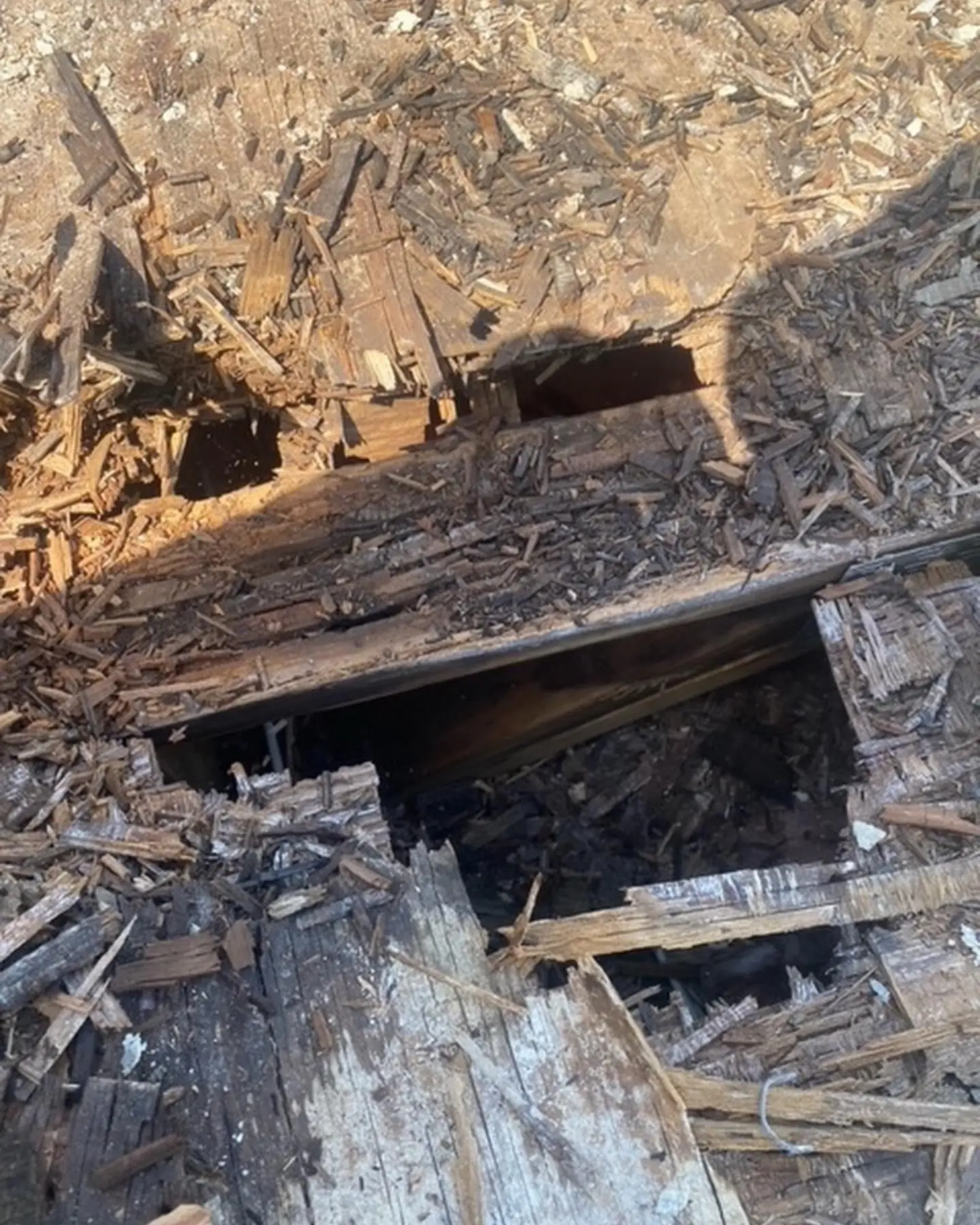
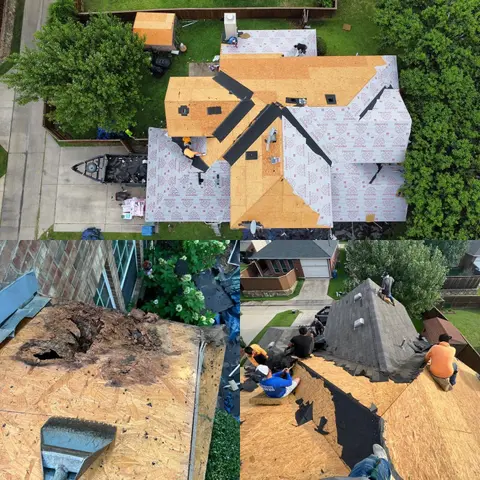
A ridge that dips, a slope that looks wavy from the street or spots that feel spongy underfoot point to decking that has absorbed water or a structural issue. This is the sign not to wait on, because a soft deck can get worse fast and adds cost to the eventual replacement.
When I inspect a roof that the owner thinks is fine, I walk every slope and feel the deck through my boots. Soft spots tell me more about a roof's remaining life than almost anything I can see.
What does the roof's history tell you?
10. A patchwork of repairs
Mismatched shingles, layers of roofing cement around every penetration and a stack of repair invoices mean money is going into a roof that keeps finding new ways to leak. Repairs are smart on a sound roof; on a worn-out one they only delay the decision.
11. The roof already has two layers
Look at the roof edge or ask an inspector: some older DFW homes, especially in established neighborhoods, have a second layer installed over the first. Under the 2021 International Residential Code's reroofing rules, a new covering may not go over two or more existing layers, or over a deck that is water-soaked or deteriorated. A roof like that needs a full tear-off next time, so plan for the added cost.
12. Your insurer is flagging the roof
The Texas Department of Insurance notes that some policies pay less if the roof is older or showing wear, that companies may switch to actual cash value coverage as roofs age, and that if your roof is in poor condition your company might not cover it at all. A renewal letter about your roof's age or condition is a sign worth acting on before a storm tests that coverage.
Is it age or a storm?
The difference matters because it decides who pays. Age-related wear, such as curling, cracking and even granule loss across the whole roof, is a maintenance cost you plan for; insurance does not pay for a roof just because it is old. Sudden damage from hail or wind may be covered by your homeowners policy, minus the deductible. Many roofs in North Texas show both: an aging roof that also took hail last spring. A careful inspection separates the two with photos, so you know whether a claim is worth discussing with your insurer before you call. If a storm is involved, start with our guide to signs of hail damage on a roof.
Which signs are not reasons to replace?
Not every unsightly roof needs replacing. Do not let these alone push you into a new roof:
- Dark streaks. Guidance from the Asphalt Roofing Manufacturers Association describes algae discoloration, caused mainly by Gloeocapsa magma, as an aesthetic issue. It also warns against high-pressure washing, which can loosen granules and shorten shingle life.
- One missing shingle after a storm on an otherwise sound roof.
- Some loose granules in the gutters of a new roof.
- A single leak at a vent, skylight or chimney with the rest of the roof in good shape.
- Moss or debris in one shaded area, which needs cleaning and trimming, not a new roof.
Your quick self-check
Walk through this list before you call anyone.
- Find the roof's installation year from your records or permits.
- Scan every slope with binoculars for curling, cracks, bald spots and missing shingles.
- Check gutters and downspout outlets for heavy granule buildup.
- Look at the ridge and slopes from across the street for sagging.
- Go into the attic on a sunny day and look for light, stains and damp insulation.
- Count the leaks and repairs you have had in the last few years.
- Read your latest insurance renewal for notes about the roof.
If you check three or more of these boxes on an older roof, it is time for a professional inspection.
What happens if you need a new roof?
Start with a free inspection and a written estimate, not a door-knocker's verdict. HomeGuide's November 2025 guide puts typical published replacement costs at $5,700 to $16,000 on average, or $300 to $600 per square, depending on size, pitch, layers, decking and material. Those are national ranges, not our prices; Verde's price is always a written estimate after a free inspection. Try our roof cost calculator, read what a new roof costs in Dallas–Fort Worth, and see what to expect on roof replacement day.
Still on the fence? Our repair or replace decision guide walks through the trade-offs, and our roof repair page explains what a repair can fix.
Have your roof checked before the next storm
If you are seeing several of these signs, get a straight answer from someone who will tell you when a repair is enough. Chris will inspect your roof with you, check the attic, decking and flashing, photograph what he finds and explain your options. See our roof replacement page for what a new roof involves. Call or text (214) 687-1951, 24/7, or book a free roof inspection.
Questions people ask next
How do I know if my roof needs to be replaced or just repaired?
Look at how widespread the problem is. One leak at a vent or a few blown-off shingles is a repair. Wear across every slope, recurring leaks in different places or a soft deck means replacement. An inspection that includes the attic and decking gives you the answer, and an honest roofer will price a repair when one will do.
Is granule loss always a sign I need a new roof?
No. New shingles shed some loose granules for a while, which is normal. Heavy granule buildup on an older roof, or bare patches where the black asphalt shows, means the shingles are losing their protection from sun and weather. Hail can also knock granules off in spots, which is storm damage rather than age.
Can a roof look fine from the ground and still need replacing?
Yes. Brittle shingles, failed seal strips, hail bruises and soft decking are hard or impossible to see from the street. That is why a hands-on inspection matters, especially after a hail season or on a roof near the end of its expected life. Your attic can also tell you a lot before anyone climbs a ladder.
Do I need a new roof if my insurer says my roof is too old?
Not automatically, but take it seriously. Some insurers limit coverage on older roofs, pay actual cash value, or decline to cover a roof in poor condition. Get an inspection to learn its real condition. If it is sound, documentation may help with your insurer; if it is worn out, plan a replacement before a storm or a lapse in coverage forces the timing.
How long does it take to replace a roof once I decide?
It depends on the roof's size, pitch, number of layers, decking repairs and the weather, plus scheduling, permits and material delivery before work starts. Steep, tall or multi-layer roofs take longer than simple ones. Ask your roofer for a realistic start date and work schedule in writing, and read our guide to roof replacement day for what happens on site.
Sources
- InterNACHI: Standard Estimated Life Expectancy Chart for Homes
- IIBEC: Algae discolorations of roofs (ARMA guidance)
- HomeGuide: Roof repair cost (February 2026)
- Texas Department of Insurance: Replacing your roof
- 2021 IRC R908.3: Reroofing and recover limits (summary)
- HomeGuide: Roof replacement cost (November 2025)
Chris Grimes owns Verde Roofing in Plano, Texas, a locally owned residential and commercial roofer serving Dallas–Fort Worth. Verde is an NTRCA Accredited Member, an RCAT member and a Dallas Observer Best of Dallas Best Roofer winner (readers’ choice) in 2021, 2022 and 2023.
Keep reading
Related guides
 Repair or replaceRepair or Replace Your Roof? An Honest Decision GuideRepair when the roof is reasonably young, the damage is limited to one area and the rest of the roof is sound. Replace when the roof…Read the guide
 Repair or replaceHow Long Does a Roof Last in Texas? Lifespan by MaterialPublished life-expectancy charts give about 20 years for 3-tab asphalt shingles, about 30 for architectural shingles, 40 to 80 for metal and far longer for clay…Read the guide
 Hail & storm damageSigns of Hail Damage on a Roof (and What Is Not Hail Damage)Real hail damage on a shingle roof shows up as random, roughly round impact marks where granules are knocked away and the mat underneath feels soft…Read the guide