
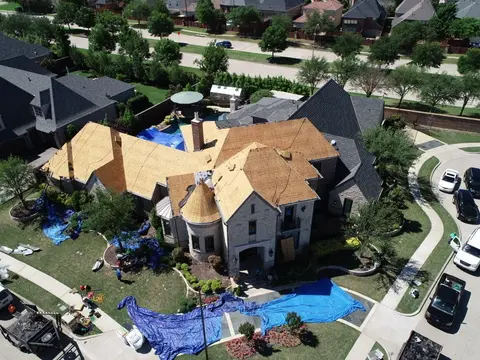
Solar Panels and Your Roof: Replace First, Costs and Incentives in Texas
 By Chris Grimes, owner of Verde RoofingPublished September 12, 2026 · 8 min read

In short
If your roof is within several years of replacement, replace it before installing solar, because panels must be removed and reinstalled to reroof later; Fixr puts that at about $3,800. Whether solar is worth it in Texas now depends on your usage, roof, buyback plan and budget: the federal home solar credit ended for systems completed after 2025, and Texas has no statewide net metering.
Key takeaways
- Solar panels last about 25 to 30 years, according to the U.S. Department of Energy, so the roof under them should have at least that much life left.
- The IRS says the residential clean energy credit (§25D) is not allowed for expenditures made after December 31, 2025, and an expenditure counts as made when installation is completed.
- Texas has no statewide net metering policy, so what you are paid for exported power depends on your retail electric provider's buyback plan or your local utility's rules.
- Texas Tax Code §11.27 exempts from property tax the value a solar system adds to your home when it mainly produces power for on-site use.
- Texas Property Code §202.010 limits an HOA's power to ban solar, but it can still require approval and set some placement and appearance rules.
You are thinking about rooftop solar, and the question that should come first is not about panels at all. It is about the roof they will sit on for the next few decades. Panels bolt through your roof, cover a large part of it, and have to come off if the roof needs work later.
This guide covers when to replace the roof first, what solar typically costs in Texas, where the incentives stand as of November 2026, how Texas compensates you for extra power, what your HOA can and cannot do, and why having one company responsible for both the roof and the panels matters.
Should you replace your roof before installing solar?
Usually yes, if your roof is anywhere near the end of its life. The U.S. Department of Energy notes that solar panels last about 25 to 30 years, similar to the life of a roof, and that installing solar at the same time as a roof replacement avoids paying to remove and reinstall panels when the roof is replaced later.
That removal is not cheap. Fixr's Texas solar cost guide lists about $3,800 to remove and reinstall solar panels if you replace or repair your roof later, and that is on top of the roof itself. The real figure depends on the number of panels, the racking, roof height and pitch, and permits.
A simple way to think about it:
| Roof condition | What usually makes sense |
|---|---|
| New or nearly new roof | Install solar now |
| Middle-aged roof in good shape, no storm damage | Have it inspected; solar may be fine if it has many years left |
| Older roof, worn granules, past repairs | Replace the roof first, then install solar |
| Recent hail or wind damage | Settle the storm repairs or replacement before solar goes up |
| Leaks or soft decking | Fix the roof first, no exceptions |
North Texas makes this more important. Spring hail is a regular event, and a roof that took a storm last year may already have damage that would be covered under your policy now but becomes a removal-and-reinstall problem later. Our guides on how long a roof lasts in Texas and repair or replace your roof help you judge where your roof stands.
When I look at a roof for solar, the first thing I check is the decking and the roof planes the panels will cover. Once panels are up, those are the areas nobody sees for years.
Is the federal solar tax credit still available in 2026?
Not for homeowners who complete a system in 2026. The 2025 budget law ended the residential clean energy credit under Internal Revenue Code §25D. The IRS's own guidance (fact sheet FS-2025-05) says the credit will not be allowed for any expenditures made after December 31, 2025, and that an expenditure is treated as made when the original installation is completed. So a home system finished in 2026 does not qualify, even if you signed or paid a deposit earlier.
We found no change to that rule as of November 2026. Commercial solar for businesses falls under separate federal credits with their own timeline and conditions. Because those rules are technical and changing, business owners should get advice from a tax professional before counting on any credit.
What this means in plain terms: the full cost of a home system is now yours to cover. Be very careful with any sales pitch that still quotes a 30 percent federal credit for a new home installation.
How much do solar panels cost in Texas?
Fixr's January 2026 data puts a typical Texas installation at an average of $21,460 before incentives, about $2.85 per watt, for a typical 7.1-kilowatt system. Its national range is $19,100 to $23,800. These are published averages, not our prices.
What moves the price of a solar system:
- System size. More panels mean more cost; larger systems often cost less per watt.
- Equipment. Panel type, inverters or microinverters, and add-ons like batteries.
- Roof layout. Multiple small roof planes, steep pitch, tile or metal roofing and tall two-story homes add labor.
- Electrical work. Main panel upgrades or long wire runs.
- Permits and utility steps. Your city's permit and your utility's interconnection approval before the system can be switched on.
- How you pay. Cash, loan, lease or power purchase agreement all change the real cost over time.
If you need a new roof as well, budget both together. Our roof cost calculator gives a rough roof range, and our guide on paying for a new roof covers the financing side.
Does Texas have net metering?
Not statewide. Solar United Neighbors, a solar advocacy group, notes that 34 states and Washington, D.C., have some form of statewide net metering policy and Texas does not. It also reports that some Texas plans offered net metering until late 2021 but those options have since disappeared.
What you are paid for extra power depends on where you live:
- In deregulated areas, such as much of Dallas–Fort Worth, your retail electric provider decides whether it offers a solar buyback plan and at what rate. Plans differ widely, and some pay far less for exported power than you pay for power you buy.
- City-owned utilities and electric cooperatives set their own solar rules and rates.
This is the single biggest reason no honest installer should quote you a payback period as a fact. Your return depends on how much power you use and when, how much the system produces on your roof, the plan you choose and how prices change over time. Get a production estimate for your roof, look at your own bills and buyback options, and do the math yourself or with someone who is not selling you the system.
What incentives does Texas offer for home solar?
Texas has no state income tax, so there is no state solar tax credit. The main statewide benefit is on property tax.
Texas Tax Code §11.27 entitles a person to an exemption from property tax on the amount of appraised value that arises from installing a solar or wind-powered energy device on their property, when the device is primarily for producing and distributing energy for on-site use. In practice, the solar system should not raise your appraised value for tax purposes. You generally need to apply with your county appraisal district, so ask it which form to file once the system is installed.
Some utilities and electric providers have offered their own solar or battery programs. These change often, so ask your provider directly what is available today.
Can your HOA restrict solar panels in Texas?
Many homes in Plano, Frisco, McKinney and across Collin County sit in planned communities with HOAs. Texas Property Code §202.010 bars an association from including or enforcing rules that prohibit or restrict an owner from installing a solar energy device, with specific exceptions. Among them, the association may:
- Require approval before installation.
- Restrict roof-mounted panels that extend higher than or beyond the roofline.
- Restrict panels that do not follow the roof's slope or whose top edge is not parallel to the roofline.
- Require frames, brackets and visible piping or wiring in a silver, bronze or black tone.
- Designate a location on the roof, unless another location would increase the system's estimated annual energy production by more than 10 percent, measured with a publicly available National Renewable Energy Laboratory modeling tool.
- Prohibit devices that, as installed, would void material warranties.
Submit plans to the architectural committee before anything goes on the roof.
Why should the same company handle the roof and the solar?
Every rooftop solar system means dozens of attachments through your roof. When something leaks later, the hardest question is often who is responsible: the roofer, the solar company or the homeowner. Using one company for both removes that gap.
The practical advantages of a roofer who also installs solar:
- The roof gets judged honestly first. A roofer can tell you whether the roof should be replaced before panels go up, instead of panels going onto a roof with a few years left.
- One schedule. If the roof needs replacing, the roof and the solar can be planned as one project.
- Attachments and flashing are roofing work. Every penetration needs to be flashed and sealed correctly for your roof type.
- Storm repairs are simpler later. After hail, the same company can inspect the roof and the array, document damage and plan any removal and reinstallation.
- Clear responsibility. Ask any installer to state in writing who covers leaks at the attachments, and for how long.
Verde installs rooftop solar for homes and businesses and also does the roof under it. See our solar services and our roof replacement page. If you are replacing the roof first, our guide to Class 4 impact-resistant shingles covers a roof built for North Texas hail, and our guide to roof warranties explains what to get in writing.
What should you ask before signing a solar contract?
Solar is often sold door to door, especially after storms. Take your time and ask:
- Has anyone inspected my roof, and how many years of life does it have left?
- Who removes and reinstalls the panels if the roof needs work, and at what price?
- What production estimate is this based on, and what shade and roof direction were assumed?
- Which buyback plan or utility rate did you use, and what happens if it changes?
- Are you quoting any federal credit, and how does that square with IRS guidance?
- Is this a purchase, loan, lease or power purchase agreement, and what happens if I sell the house?
- Who handles the permit, the utility interconnection and the HOA approval?
- Does my homeowners policy cover the panels, and does adding them change my premium? Ask your agent before signing.
If someone pressures you to sign the same day, walk away. Our guide on spotting storm chasers applies to solar sellers as well.
Start with the roof under your future solar system
If you are considering solar, the first step is knowing how much life your roof has left. Call or text (214) 687-1951, 24/7, or book a free roof inspection. Chris will inspect the roof with you, photograph its condition, tell you whether it should be replaced before solar, and give you a written estimate for the roof, the solar or both.
Questions people ask next
Can I still get the 30% federal solar tax credit in 2026?
Not for a home system completed in 2026. IRS guidance on the 2025 budget law says the residential clean energy credit is not allowed for expenditures made after December 31, 2025, and an expenditure counts as made when installation is completed. Business solar falls under separate rules. Ask a tax professional about your situation before relying on any credit.
Does Texas have net metering for home solar?
There is no statewide net metering requirement in Texas. In deregulated areas, some retail electric providers offer solar buyback plans with their own rates and terms, and city-owned utilities and electric cooperatives set their own rules. Compare plans carefully, because export credits can be far below the retail price you pay for power.
How much does it cost to remove and reinstall solar panels for a new roof?
Fixr's Texas solar cost guide lists about $3,800 to remove and reinstall panels when you replace or repair your roof later, not counting the roof itself. Costs depend on the number of panels, racking type, roof height and pitch, permits and whether any parts need replacing. Get the price in writing before the roof is scheduled.
Can my HOA stop me from putting solar panels on my roof in Texas?
Generally no. Texas Property Code §202.010 bars most HOA bans on solar devices, but the association can require approval, keep panels from extending above or beyond the roofline, require them to follow the roof slope, and designate a location unless another spot would produce more than 10 percent more energy. Submit plans before installing.
Will solar panels raise my property taxes in Texas?
Texas Tax Code §11.27 exempts the appraised value that a solar energy device adds to real property when the device is mainly for on-site use. You generally need to apply for the exemption with your county appraisal district. Ask the district which form and documents it needs once the system is installed.
Sources
- IRS: FAQs on changes to sections 25C, 25D and other energy credits under the One Big Beautiful Bill Act (FS-2025-05)
- Solar United Neighbors: Texas solar owners are being shortchanged
- Texas Tax Code §11.27: Solar and wind-powered energy devices
- Texas Property Code §202.010: Regulation of solar energy devices
- Fixr: Solar panel installation cost in Texas
- U.S. Department of Energy: Replacing your roof? It's a great time to add solar
Chris Grimes owns Verde Roofing in Plano, Texas, a locally owned residential and commercial roofer serving Dallas–Fort Worth. Verde is an NTRCA Accredited Member, an RCAT member and a Dallas Observer Best of Dallas Best Roofer winner (readers’ choice) in 2021, 2022 and 2023.
Keep reading
Related guides
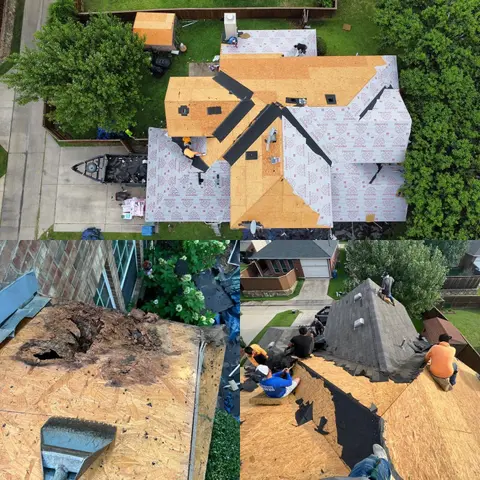 Repair or replaceHow Long Does a Roof Last in Texas? Lifespan by MaterialPublished life-expectancy charts give about 20 years for 3-tab asphalt shingles, about 30 for architectural shingles, 40 to 80 for metal and far longer for clay…Read the guide
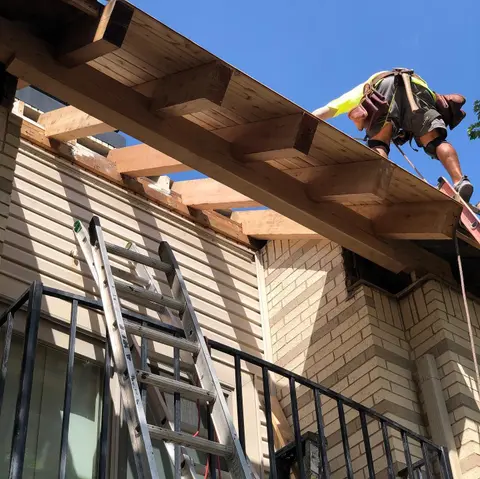 Repair or replaceRepair or Replace Your Roof? An Honest Decision GuideRepair when the roof is reasonably young, the damage is limited to one area and the rest of the roof is sound. Replace when the roof…Read the guide
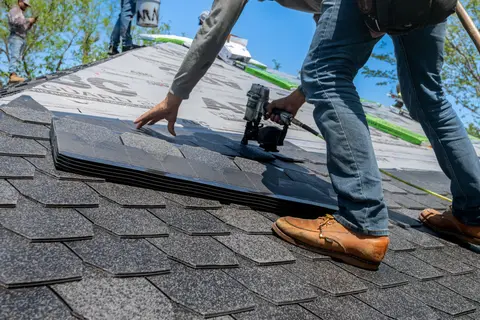 Roofing materialsBest Roofing Shingles for Texas Hail: Class 4 Impact-Resistant Shingles ExplainedClass 4 is the highest impact rating under UL 2218: the shingle survives two hits in the same spot from a 2-inch steel ball without cracking…Read the guide