Metal Roof Cost in Texas: Standing Seam, Stone-Coated Steel and Panels
 By Chris Grimes, owner of Verde RoofingPublished September 10, 2026 · 8 min read
In short
Fixr’s 2026 guide puts metal roofing at about $11 per square foot on average versus about $4 for asphalt shingles, roughly two to three times the price. Standing seam runs about $7 to $30 per square foot in Fixr’s data. Whether it pays back depends on how long you stay, your insurer’s discount and cosmetic-damage terms, and resale: Cost vs. Value 2025 shows metal recouping 50 percent at sale.
Key takeaways
- Fixr’s 2026 data puts metal at about $11 per square foot installed on average versus about $4 for asphalt, with a typical national range of $14,400 to $38,400 per roof.
- Standing seam is the premium metal system; This Old House lists it at about $8 to $39 per square foot depending on metal, gauge, seam and finish.
- The 2025 Cost vs. Value report shows a metal roof recouping 50 percent of its cost at resale, versus 68 percent for asphalt shingles.
- Texas insurers set their own discounts for impact-resistant roofs, and TDI warns that a metal roof discount can come with a cosmetic-damage exclusion.
- No federal tax credit applies to a metal roof placed in service after December 31, 2025, according to the IRS.
After the second or third hail claim on the same house, a lot of North Texas homeowners start asking the same question: should the next roof be metal? It looks sharp on a modern farmhouse in Prosper or a ranch outside Rockwall, it lasts a long time, and it does not shed granules after every storm.
It also costs a lot more up front. This guide puts real published numbers on that difference, explains the three main types of metal roof, and walks through the factors that actually decide whether metal pays back on your house. It does not promise a payback period, because nobody can honestly promise one.
How much does a metal roof cost in Texas?
There is no official Texas price for metal roofing. What we have are national cost guides. Fixr's 2026 metal roofing guide, updated in January 2026, reports:
- A typical national range of $14,400 to $38,400 for a metal roof
- An average of $26,500 for a 2,400-square-foot steel roof
- An average of about $11 per square foot installed, with a typical range of $3 to $30
This Old House's 2026 standing seam guide gives a wider range for that specific system, about $8 to $39 per square foot, and cites RSMeans data putting labor alone at $2.95 to $10.93 per square foot.
Those are national guides, not Verde's prices and not a DFW average. To get a planning number for your roof size, try our roof cost calculator, then get a written estimate.
How much more does metal cost than shingles?
Fixr puts metal at about $11 per square foot on average versus about $4 for asphalt shingles, and says metal typically costs two to three times as much. On a 25-square roof (2,500 square feet of roof surface), that difference at the averages is roughly $10,000 for asphalt versus $27,500 for metal, before tear-off, decking and trim.
Here is how the main options compare in the published data:
| Roof type | Published installed range per sq ft | Source |
|---|---|---|
| Asphalt shingles | About $4 average | Fixr 2026 |
| Asphalt shingles | $3.44 to $12 | This Old House 2026 |
| Corrugated or exposed-fastener metal | $3.50 to $26 | Fixr 2026 |
| Metal shingles | $6 to $22 | Fixr 2026 |
| Standing seam | $7 to $30 | Fixr 2026 |
| Standing seam | About $8 to $39 | This Old House 2026 |
The type of metal matters too. Fixr lists steel at $6 to $16 per square foot, aluminum at $4 to $12, zinc at $6 to $12 and copper at $15 to $30. Steel is what most North Texas homes use.
For the shingle side of the comparison, see what a new roof costs in Dallas–Fort Worth.
What is the difference between standing seam, stone-coated steel and panels?
These three systems look, perform and cost very differently:
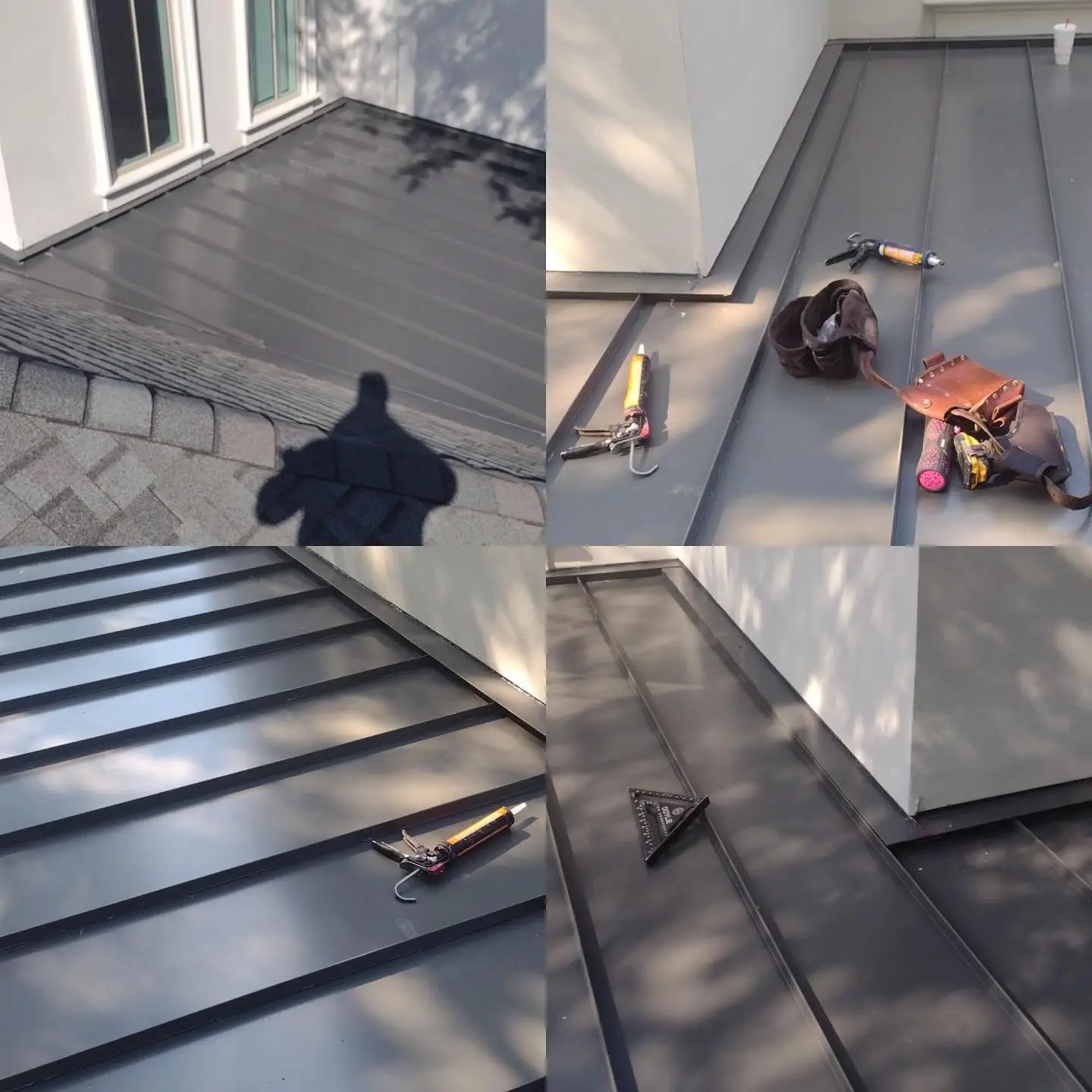
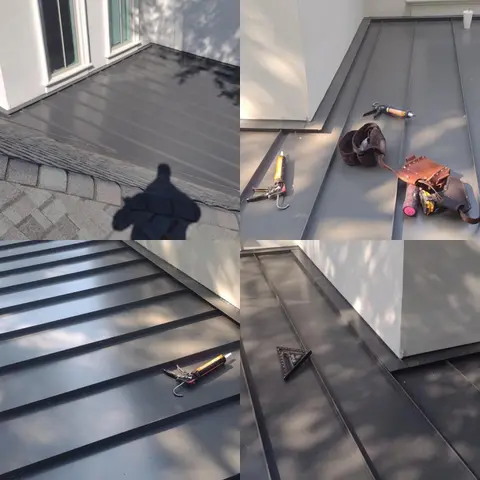
Standing seam. Long vertical panels joined by raised seams, with the fasteners hidden under the seam or in clips. No exposed screws to leak. This is the premium residential metal roof. This Old House notes that snap-lock seams are generally faster and cheaper to install than mechanically seamed panels, and that PVDF finishes cost more than SMP finishes but fade less.
Stone-coated steel. Steel panels pressed to look like shingles, shakes or tile, with a granule coating bonded to the surface. It gives a traditional look on a home where a standing seam roof would not suit the architecture or the HOA. The national guides we reviewed for this article did not publish a separate price range for stone-coated steel, so treat any number you see online with caution and get a written quote.
Exposed-fastener panels. Ribbed or corrugated panels screwed through the face. Lower cost, common on barns, shops and outbuildings. The screws rely on rubber washers that age in the sun and need periodic checking, which is why many homeowners choose standing seam for the house itself.
What drives the price of a metal roof?
This Old House lists the main cost factors for standing seam, and they apply to most metal roofs:
- Roof size and complexity. Hips, valleys, dormers and penetrations mean more cutting, trim and labor.
- Pitch and access. Steep or tall roofs need more safety setup.
- Metal type and gauge. Thicker steel costs more and resists dents better.
- Panel width and seam type. Snap-lock versus mechanically seamed.
- Finish. SMP versus PVDF coatings.
- Tear-off. Fixr lists removal of an existing roof at $1,000 to $7,400, depending on size and the weight of the old materials.
- Decking, underlayment, flashing and trim. Metal needs custom trim at every edge and wall.
- Permits and local labor rates.
When you compare bids, make sure each one names the panel profile, gauge, finish system, underlayment and trim package. Two "standing seam" quotes can describe very different roofs.
Ask each bidder these questions in writing:
- What gauge and what metal (steel, aluminum) are the panels?
- Is the seam snap-lock or mechanically seamed, and why that choice for this roof?
- Which finish system, and what does the finish warranty cover?
- Are the panels impact-rated, and what class?
- Is the old roof coming off, and what is the per-sheet decking price?
- How are pipe boots, chimneys and wall transitions flashed?
The answers tell you as much about the roofer as about the roof. A crew that installs metal regularly will answer all six without hesitating.
Does a metal roof pay back in Texas?
Honestly, it depends, and anyone who quotes you a precise payback period is guessing. Here are the four things that decide it:
How long you will own the house. Metal's main financial case is lifespan. Fixr says steel can last up to 60 years, and This Old House gives 50 to 80 years for standing seam versus 15 to 30 years for asphalt. If you plan to sell in five years, you will not see most of that benefit.
Resale value. The 2025 Cost vs. Value report from the Journal of Light Construction puts a national metal roofing replacement at $51,865 with 50 percent recouped at resale, versus $31,871 and 68 percent recouped for asphalt shingles. So metal adds value at sale, but the report estimates it recovers a smaller share of its cost. Our guide on whether a new roof adds home value or lowers your insurance covers this in depth.
Insurance. The Texas Department of Insurance says a metal roof may lower your premium, but not all insurers offer a discount, and savings vary. TDI's roofing discounts page explains that roof coverings tested for impact resistance are rated Class 1 to 4, Class 4 receives the highest credit, and each insurer sets its own discount amounts. Ask your agent for the actual number before you decide.
Hail and the cosmetic-damage catch. TDI warns that a discount for a metal roof may come with conditions, such as excluding cosmetic damage. Dents that only affect appearance may not be paid, and insurers can add exclusions at renewal. Read our guide on hail dents on a metal roof before you buy.
Are there tax credits or energy rebates for metal roofs?
Not at the federal level for a roof installed now. The IRS states that the Energy Efficient Home Improvement Credit (Section 25C) is not allowed for any property placed in service after December 31, 2025. Do not rely on any contractor who promises a federal tax credit for a new roof.
On energy savings, a light-colored, reflective metal roof can reduce attic heat in a Texas summer, but the amount depends on color, coating, insulation and ventilation. A metal roof over a poorly ventilated, under-insulated attic will not perform the way the brochure suggests. Ask for the product's published solar reflectance rating, and have the attic checked at the same time. Our guide to roof color, cool roofs and your electric bill explains what to look for.
Metal or impact-resistant shingles?
For many DFW homeowners, the real comparison is not metal versus a basic shingle. It is metal versus a Class 4 impact-resistant shingle. Both can qualify for impact-resistant roofing credits with insurers that offer them, and the shingle option usually costs far less up front.
Use this checklist to decide:
- You plan to stay 15 years or more: metal's lifespan matters more.
- Your HOA allows metal: confirm before you price it.
- Your insurer's metal discount has no cosmetic exclusion, or you are comfortable with it.
- You want a traditional look at a lower price: compare Class 4 impact-resistant shingles for Texas hail.
- You want the full pros and cons: read metal roof vs. shingles in North Texas.
If the up-front cost is the main obstacle, our guide on how to pay for a new roof covers savings, insurance and loan options.
How do I get an accurate metal roof price?
A metal roof price should come from a measured roof and a specific system. Verde Roofing installs metal roofs alongside shingle, tile and slate, so Chris can price more than one option for the same house and show you the trade-offs side by side. Every price is a written estimate after a free inspection. Learn more on our metal roofing page or our roof replacement page.
Want to compare metal and shingles for your house?
Call or text (214) 687-1951, 24/7, or book a free roof inspection. Chris will measure your roof and give you written estimates for metal and shingles so you can compare them on real numbers.
Questions people ask next
Does a metal roof dent in Texas hail?
It can. The Texas Department of Insurance says metal roofs can dent or scratch from hail, wind-blown debris and branches, though those marks usually don’t affect how the roof performs. Thicker panels and impact-rated products resist denting better. Check whether your policy excludes cosmetic damage before you choose.
Is a metal roof louder in the rain?
Over a solid deck with underlayment and an insulated attic, most homeowners do not notice much difference from shingles. Metal installed over open framing, like on a barn, is much louder. Ask the roofer how the system will be installed over your deck and what underlayment is included.
Can a metal roof go over my existing shingles?
Some metal systems can be installed over one layer of shingles if local code allows and the deck is sound, which saves tear-off cost. Many roofers still recommend a tear-off so the decking can be inspected. Ask for both options in writing and why one is recommended.
How long does a metal roof last compared to shingles?
Published guides give long ranges. Fixr says steel can last up to 60 years, and This Old House gives 50 to 80 years for standing seam versus 15 to 30 years for asphalt. Real lifespan depends on the metal, finish, installation and how often hail and wind hit the roof.
Do metal roofs lower cooling bills in Texas?
A light-colored, reflective metal roof can reduce the heat that reaches your attic, which may lower cooling costs. Savings depend on color, coating, attic insulation and ventilation. Ask the roofer for the product’s published solar reflectance rating rather than relying on a color name or a sales claim.
Sources
- Fixr: How Much Does a Metal Roof Cost? (2026)
- This Old House: Standing Seam Metal Roof Cost (2026)
- JLC: Cost vs. Value Report 2025
- Texas Department of Insurance: Metal roofs and home insurance, 4 key facts
- Texas Department of Insurance: Roofing discounts
- IRS: FAQs on changes to 25C, 25D and other credits under Public Law 119-21
Chris Grimes owns Verde Roofing in Plano, Texas, a locally owned residential and commercial roofer serving Dallas–Fort Worth. Verde is an NTRCA Accredited Member, an RCAT member and a Dallas Observer Best of Dallas Best Roofer winner (readers’ choice) in 2021, 2022 and 2023.
Keep reading
Related guides
 Roofing materialsMetal Roof vs. Shingles in North Texas: Honest Pros and ConsMetal costs substantially more up front (the 2025 Cost vs. Value report prices a typical metal reroof in our region about 64 percent above asphalt) but…Read the guide
 Hail & storm damageHail Dents on a Metal Roof: Cosmetic or Functional Damage?Hail dents on a metal roof are cosmetic when they change only how the roof looks, and functional when they open seams, crack the coating, loosen…Read the guide
 Cost & financingHow Much Does a New Roof Cost in Dallas–Fort Worth?National cost guides put a full asphalt shingle replacement at roughly $3.75 to $11 per square foot of roof (Fixr, 2026), which works out to about…Read the guide