Hail Dents on a Metal Roof: Cosmetic or Functional Damage?
 By Chris Grimes, owner of Verde RoofingPublished August 3, 2026 · 9 min read
In short
Hail dents on a metal roof are cosmetic when they change only how the roof looks, and functional when they open seams, crack the coating, loosen fasteners or let water in. Many Texas policies on metal roofs carry a cosmetic damage exclusion, so a dented but watertight roof may not be covered. Have the roof inspected, read your endorsements, then decide whether to file.
Key takeaways
- Cosmetic hail damage changes how a metal roof looks; functional damage affects how it sheds water or how long it will last.
- TDI warns that a metal roof discount can come with a cosmetic damage exclusion, and that the exclusion can be added at renewal.
- A UL 2218 Class 4 rating means a 2-inch steel ball did not crack or open the panel in testing; it does not mean the roof will not dent.
- Texas law says a general question to your insurer about coverage is not a claim and cannot be used to cancel or nonrenew your policy.
- Check seams, fasteners, coatings, flashing and ridge caps before deciding whether dents are only cosmetic.
You chose a metal roof partly because it should stand up to North Texas weather. Then a spring storm rolls through Plano or McKinney, and the next morning you can see dimples across the panels when the sun hits them at an angle. The roof is not leaking. The question is whether those dents matter, whether insurance will pay for them, and whether you need to do anything at all.
The honest answer depends on two things: what the dents actually did to the roof, and what your policy says about metal. This guide walks through both, so you can make the call with facts instead of guesses.
What is the difference between cosmetic and functional hail damage?
Cosmetic damage changes how the roof looks. Functional damage changes how the roof works: how it sheds water, how well it is attached, or how long it will last. The Texas Department of Insurance (TDI) puts it plainly in its guide to metal roofs: hail can dent or scratch a metal roof, and that damage may not affect performance even though it affects appearance.
Here is how roofers usually sort what they find:
| What you see | Usually cosmetic or functional? | Why it matters |
|---|---|---|
| Shallow round dents in the flat of a panel | Cosmetic | Water still runs off; the steel and coating are intact |
| Dents with cracked or chipped paint or coating | Functional | Exposed steel can rust, and rust shortens the panel's life |
| Dents on a standing seam or panel lap | Often functional | A deformed seam can open and let wind-driven rain in |
| Crushed or split ridge cap, hip cap or trim | Functional | These pieces cover joints that must stay sealed |
| Fasteners pushed in, tilted or with torn washers | Functional | Exposed-fastener roofs depend on those seals to stay dry |
| Granule loss on stone-coated steel | Can be either | Heavy loss exposes the coating beneath; light scuffing may not |
| Dented gutters, vents and downspouts | Evidence of hail size | Not roof damage by itself, but it shows how hard the storm hit |
Most real roofs show a mix. A few dented panels on the north slope may be purely cosmetic, while a ridge cap on the same roof was split open. That is why one walk across the roof tells you far more than a photo from the driveway.
Does homeowners insurance cover hail dents on a metal roof in Texas?
It depends on your policy, and specifically on whether it has a cosmetic damage exclusion. TDI warns that a discount for a metal roof "might come with conditions like an exclusion for cosmetic damage." Under that kind of exclusion, if the damage affects only how the roof looks and the roof still functions, the insurer will not pay to fix it.
Two more points from TDI are worth knowing. First, the exclusion can show up at renewal, because companies can update terms and add new exclusions then. A policy that covered cosmetic dents when you bought the roof may not cover them now. Second, TDI recommends reviewing your policy every year, which is the only way to catch that kind of change before a storm.
What to look for in your own paperwork:
- The declarations page, which lists every endorsement attached to the policy
- Any endorsement titled cosmetic damage, metal roof, or roof surfacing
- How the endorsement defines cosmetic: some name dents, dings and marks that change appearance only
- Whether the endorsement says anything about damage that lets water in or shortens the roof's life
- Your wind and hail deductible, which TDI notes may differ from the deductible for other damage
If the wording is unclear, ask your agent in writing and keep the reply. Read our guide on how a roof insurance claim works in Texas for the steps once you decide to file.
How do you tell if dents on a metal roof are only cosmetic?
You look past the dents to the places where a metal roof can fail: seams, fasteners, coatings and the trim that seals the joints. A careful inspection follows a checklist like this one:
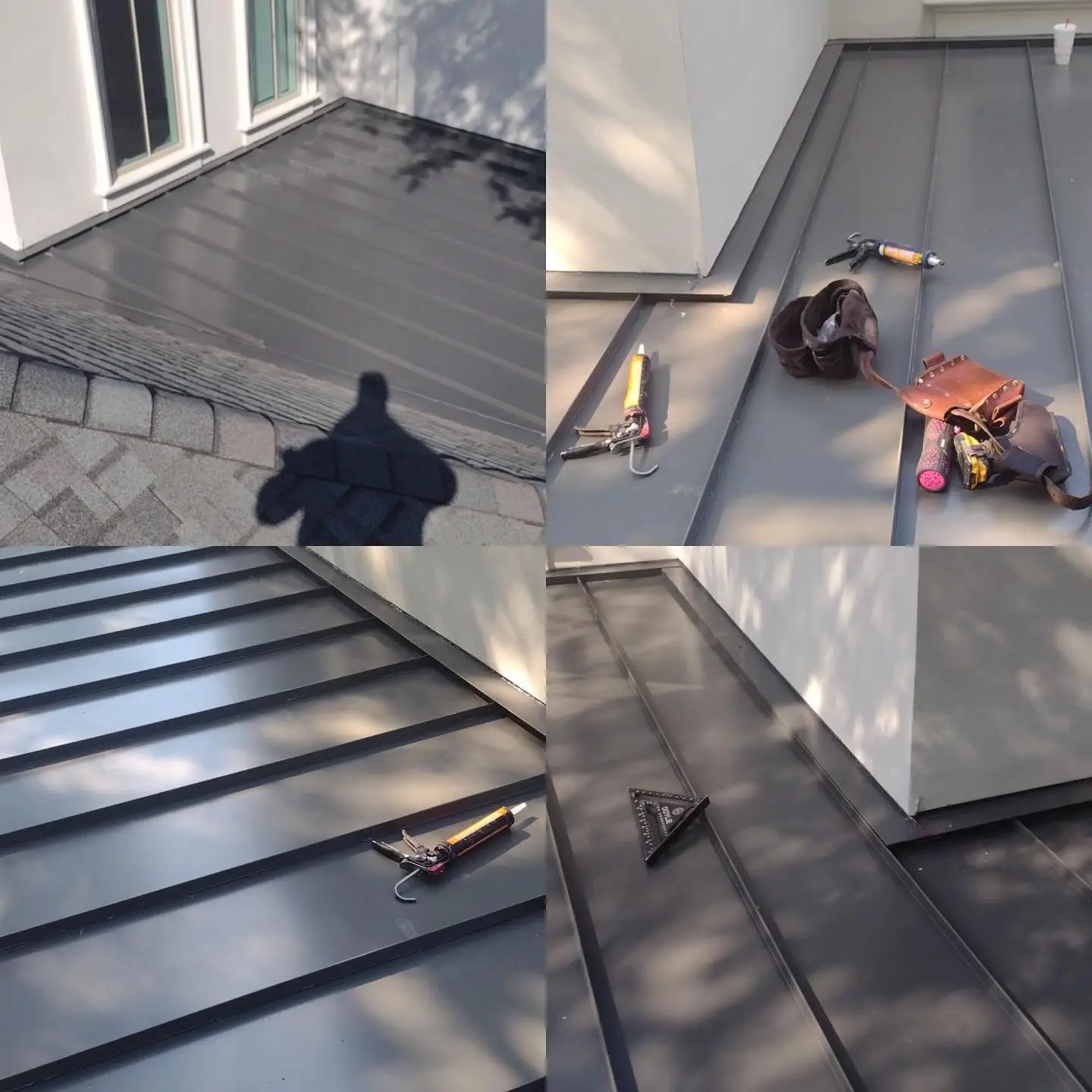
- Seams and laps. On standing seam roofs, check whether any seam is flattened, bent or pulled open. On lapped panels, check that the overlap still sits tight.
- Coating. Look closely inside the deepest dents for cracked, crazed or chipped paint. Bare steel is the start of rust.
- Fasteners and washers. On exposed-fastener panels, check for screws that were driven in, tilted or loosened, and for torn or crushed rubber washers.
- Ridge, hip and rake trim. These thin pieces take direct hits and cover the most important joints.
- Flashing and penetrations. Pipe boots, vent flashing, skylight curbs and chimney flashing are often softer than the panels.
- Stone-coated steel. Check how much granule coating was knocked off and whether the base coating underneath is exposed.
- Soft metals and collateral. Dented gutters, vents, AC fins and window wraps help confirm hail size and direction.
- The attic, if accessible. Look for daylight at seams or fresh water stains on the decking.
When I walk a metal roof after hail, I spend more time on the seams, trim and fasteners than on the open panels. The dents in the middle of a panel are what everyone sees. The damage that leads to leaks usually sits at the edges.
For a broader look at how hail marks differ from wear, see signs of hail damage on a roof.
What does a Class 4 rating on a metal roof actually mean?
Many metal roofing products are rated Class 4 under UL 2218, the impact test most people mean when they say "impact-resistant." The test drops steel balls onto the roofing from set heights to imitate hailstones. The table below is from the UL 2218 class chart published by metal roof manufacturer McElroy Metal:
| UL 2218 class | Steel ball diameter | Drop height |
|---|---|---|
| Class 1 | 1-1/4 inches | 12 feet |
| Class 2 | 1-1/2 inches | 15 feet |
| Class 3 | 1-3/4 inches | 17 feet |
| Class 4 | 2 inches | 20 feet |
To pass, the material must show no tearing, fracturing, cracking, splitting or other opening. Dents are not on that list. In plain terms, a Class 4 metal roof is built to keep from being punctured or split by a large hailstone, not to stay perfectly smooth. A Class 4 roof that is covered in dents after a storm has done what the rating promised.
That matters for two reasons. It sets fair expectations about how the roof will look after a big storm, and it explains why insurers that offer metal roof discounts sometimes pair them with a cosmetic exclusion. If you are still choosing a material, our comparison of metal roofs and shingles in North Texas covers the trade-offs.
Does the type of metal roof change how hail affects it?
Yes. The three systems common on DFW homes react differently to hail, and the repair options differ too.
| System | How hail usually shows | Typical repair path |
|---|---|---|
| Standing seam (concealed fasteners) | Dents in panels; risk at seams and trim | Replace individual panels or trim; matching color can be the hard part |
| Stone-coated steel | Granule loss and dents; coating can be exposed | Replace individual pieces; check granule loss across the slope |
| Exposed-fastener panels | Dents plus loosened screws and torn washers | Re-fasten or replace fasteners; replace panels with open laps |
Panel thickness and coating also play a part. TDI notes that durability depends on the metal type, panel thickness and coating, and that proper installation is very important. A thin panel on an older barn-style roof in Wise or Parker County will look and behave differently after hail than a heavier standing seam roof on a newer home in Frisco.
If you are pricing a new system after a storm, see what a metal roof costs in Texas.
Should you file an insurance claim for cosmetic hail dents?
Not automatically. Work through these steps first:
- Get the roof inspected. Find out whether anything is functional: open seams, cracked coating, loose fasteners, damaged trim or flashing.
- Read your endorsements. Find out whether cosmetic damage to a metal roof is excluded.
- Compare the likely covered amount to your deductible. If the only damage is cosmetic and excluded, or if the functional repairs cost less than your wind and hail deductible, a claim may not make sense.
- Ask general questions safely. Under Texas Insurance Code §551.113, an insurer may not use a "customer inquiry" as a basis to cancel or nonrenew your policy. That includes asking how to file a claim and whether your policy covers a loss, unless the question concerns specific damage that leads to an investigation or claim.
- Document everything either way. Take dated photos of the dents now, including close-ups and wide shots, and keep them with your policy. See how to document roof storm damage.
- If you file, be ready for the adjuster. Our guide to the insurance adjuster's roof inspection explains what happens on that visit.
If you are not sure whether to start with the insurer or a roofer, read should you call a roofer or your insurance company first.
What role does a roofer play if you do file?
This is your claim, and you make the decisions. A roofer's job is to inspect, document and do the work. Texas law draws that line clearly: under Texas Insurance Code §4102.163, a contractor may not act as a public adjuster or advertise to adjust claims on property where it does or may do the work. TDI's guidance adds that a contractor should not say it represents you or speaks for you on coverage.
What we do on a metal roof after hail:
- Chris inspects the roof with you and shows you what he finds, cosmetic and functional
- We document the damage with photos, including seams, fasteners, trim and flashing
- We explain repair versus replacement before you decide whether to file
- If you file, we meet the adjuster on site to show the damage we documented
- We write the repair estimate and, if you hire us, do the work
You can learn more about how we work on our insurance claims page and our storm and hail damage page.
When does a dented metal roof need repair, and when can you leave it?
Leave it alone when the inspection finds only shallow dents in the flat of the panels, the coating is intact, and seams, fasteners and trim are sound. Keep your photos, check the roof again after the next big storm, and revisit the decision if you plan to sell.
Repair when you have anything functional: a seam that lifted, coating cracked down to bare steel, fasteners that need replacing, or damaged trim and flashing. These repairs are often small and targeted.
Consider replacement when damage is widespread across slopes, when many seams or laps are compromised, or when matching replacement panels is not possible on an older or discontinued profile. TDI notes that many policies reduce coverage as a roof ages, though more slowly for metal than for shingles, so check how your policy treats an older metal roof before you plan around a claim.
Whatever you decide, see our metal roofing page for the systems we install and repair.
Get a straight answer on your metal roof
If hail left your metal roof dented and you want to know whether it is cosmetic or functional, call or text (214) 687-1951, 24/7, or book a free roof inspection. Chris will walk the roof with you, photograph what he finds and tell you plainly whether you need a repair, a claim or nothing at all.
Questions people ask next
Will hail dents make my metal roof leak later?
Shallow dents in the flat of a panel usually do not leak. The risk is at seams, laps, fasteners and flashing, where a dent can open a joint or crack the coating. Once the coating cracks, steel can start to rust. That is why the inspection focuses on edges and attachment points, not on how many dents you can count from the yard.
How do I know if my policy has a cosmetic damage exclusion?
Look at the endorsements listed on your declarations page, then read each one. The exclusion may be titled “cosmetic damage” or tucked into a metal roof or roof surfacing endorsement. If you cannot find it, ask your agent in writing whether your policy excludes cosmetic hail damage to a metal roof and keep the answer.
Can a few damaged metal panels be replaced without a new roof?
Often, yes. Standing seam and exposed-fastener panels can be replaced individually, and stone-coated steel pieces can be swapped. The catch is matching: a new panel may not match the color or profile of a roof that has weathered for years in the Texas sun, so ask to see the replacement color next to an existing panel first.
Is a metal roof still a good choice in a hail area like DFW?
For many homes it is. Metal resists fire, sheds water well and, according to TDI, can last longer than standard shingles. The trade-off is that it can dent and that dents may be excluded from coverage as cosmetic. Weigh the look you can live with against the price, the insurance terms and how long you plan to stay.
Should I fix cosmetic dents if insurance will not pay?
Usually not, unless the look bothers you or you are preparing to sell. Cosmetic dents do not change how the roof sheds water. Spend the money on anything functional the inspection finds, such as loose fasteners, cracked sealant or damaged flashing, and keep dated photos of the dents in case they matter in a later claim.
Sources
- Texas Department of Insurance: Metal roofs and home insurance, 4 key facts for homeowners
- McElroy Metal: What is a Class 4 roof? (UL 2218 test table)
- Texas Insurance Code §551.113: Customer inquiry
- Texas Department of Insurance: Replacing your roof
- Texas Department of Insurance: Roofing and insurance, know the law
Chris Grimes owns Verde Roofing in Plano, Texas, a locally owned residential and commercial roofer serving Dallas–Fort Worth. Verde is an NTRCA Accredited Member, an RCAT member and a Dallas Observer Best of Dallas Best Roofer winner (readers’ choice) in 2021, 2022 and 2023.
Keep reading
Related guides
 Roofing materialsMetal Roof vs. Shingles in North Texas: Honest Pros and ConsMetal costs substantially more up front (the 2025 Cost vs. Value report prices a typical metal reroof in our region about 64 percent above asphalt) but…Read the guide
 Hail & storm damageSigns of Hail Damage on a Roof (and What Is Not Hail Damage)Real hail damage on a shingle roof shows up as random, roughly round impact marks where granules are knocked away and the mat underneath feels soft…Read the guide
 Insurance claimsThe Insurance Adjuster's Roof Inspection: What to Expect and How to PrepareThe adjuster walks the roof, counts hail hits in test areas, checks soft metals, slopes and interior damage, measures the roof and writes an estimate. You…Read the guide